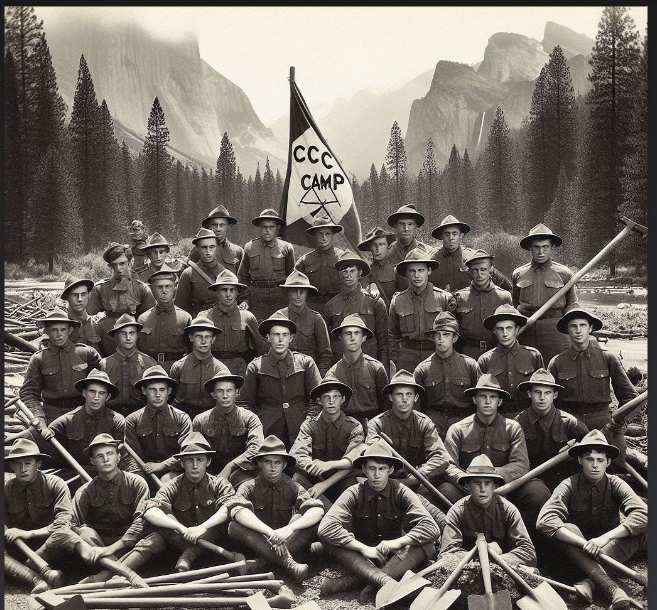
The Civilian Conservation Corps (CCC) was a crucial component of Franklin D. Roosevelt’s New Deal, initiated in response to the economic challenges faced by the United States during the Great Depression. In the spring of 1933, with the nation in crisis, Roosevelt envisioned a program that would not only provide employment but also contribute to the conservation and beautification of the country. The CCC emerged as a unique experiment in federal work relief.
In the early days of his presidency, Roosevelt’s interest in conservation and the need for employment opportunities converged, leading to the establishment of the CCC. The program aimed to put young men to work on conservation projects, focusing on activities such as planting trees, combating soil erosion, preventing forest fires, and responding to natural disasters like hurricanes and floods.
The CCC was officially introduced through the Emergency Conservation Work (ECW) program, later popularly known as the CCC. Signed into law on March 31, 1933, the program authorized the employment of young men in quasi-military camps, managed by the Army, across publicly owned forests and parks. The initial goal was to employ 250,000 men by early summer, but this number eventually expanded to nearly 300,000, including various groups such as Native Americans, Local Experienced Men (LEMs), and World War I veterans.
The enrollees received a monthly pay of $30, with a significant portion allocated to support their families. To address racial discrimination concerns, an amendment outlawing racial discrimination was included in the legislation, although separate camps were established for African American enrollees.
The organizational structure of the CCC involved collaboration between various government departments, with key figures such as Louis Howe, Roosevelt’s personal assistant, and Robert Fechner, the first director of the CCC, playing vital roles. The Army played a central role in transporting, housing, and disciplining the young men, while the Forest Service and the National Park Service supervised the conservation work.
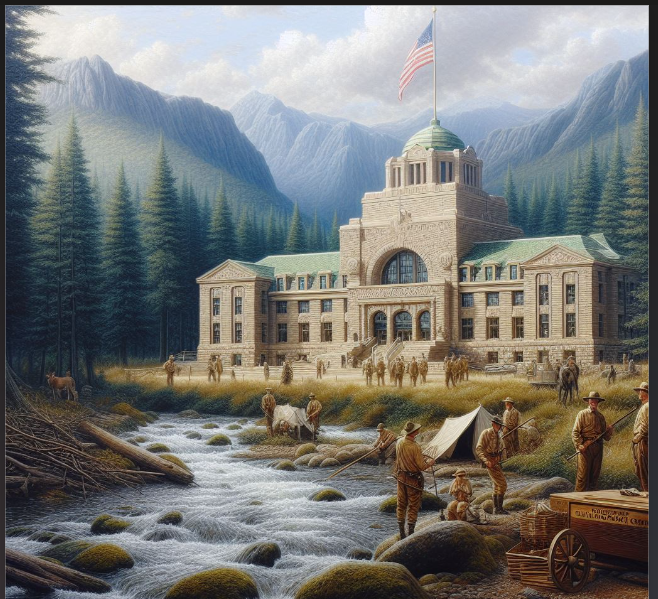
The CCC faced challenges in its early stages, including debates over the level of military involvement, logistical issues, and the need to establish work camps quickly. However, through collaborative efforts and pragmatic decision-making, the program succeeded in meeting its ambitious goals. By July 1, 1933, approximately 275,000 enrollees were spread across 1,468 camps.
Life in the early CCC camps was demanding, with challenges ranging from adverse weather conditions to the initial lack of suitable infrastructure. Despite these hardships, the young men developed a sense of pride and resilience. The program’s success was evident in its ability to address immediate economic needs, provide valuable conservation efforts, and boost the morale of the participants.
The CCC not only contributed to environmental conservation but also played a role in shaping the lives of the young men involved. It left a lasting legacy with the planting of over 3 billion trees, the development of recreational facilities, and the improvement of national parks. The educational component, introduced later in the program, aimed to enhance the skills and knowledge of enrollees.
While the CCC faced criticisms and challenges, especially in terms of its military structure and the treatment of enrollees, it remains a significant chapter in American history. The program continued until the early years of World War II, leaving behind a tangible impact on the nation’s landscapes and the lives of those who participated in this unprecedented experiment in federal work relief.