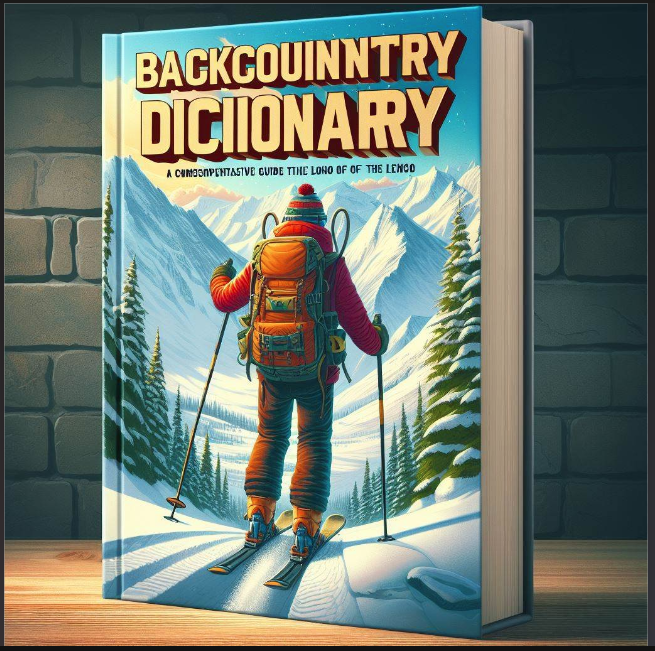
Embarking on a backcountry skiing adventure involves more than just strapping on your skis and hitting the slopes. To navigate the unique challenges and experiences of this thrilling pursuit, it’s crucial to be well-versed in the language of the mountains. Our comprehensive backcountry skiing dictionary, from A to Z, will equip you with the terminology necessary to communicate effectively with fellow enthusiasts and understand the intricacies of this exhilarating winter pursuit.
A: Avalanche to Avy Report
- Airbag: A life-saving backpack equipped with a balloon that rapidly inflates when triggered by a skier caught in an avalanche, aiding survival by keeping them closer to the avalanche debris surface.
- Alpine Touring (AT): A comprehensive system comprising bindings, boots, and skis designed for both ascending and descending mountains.
- Après: Post-skiing activities involving drinking and storytelling, commonly occurring in parking lots on the tailgate, while adorned in comfortable post-ski gear.
- Aspect: The direction a slope faces, described in relation to compass points (e.g., “a southern aspect”).
- Avalanche Beacon: An electronic device worn to assist in locating avalanche victims.
- Avalanche Probe: A collapsible rod used to probe through avalanche debris, pinpointing buried victims.
- Avy Report: Short for avalanche report, a daily forecast prepared by snow scientists detailing avalanche hazards and providing travel advice in a specific area.
B: Baselayer to Bomber
- Baselayer: The layer of clothing closest to the skin, offering warmth and moisture-wicking properties, such as the Marmot Harrier LS Crew.
- Blower: Light, dry powder that engulfs skiers’ faces, often prompting impulsive decisions.
- Bluebird: A picturesque day of skiing with clear skies and abundant sunshine.
- Bomber: An adjective describing high-strength gear, systems, or stable terrain, such as a stable snowpack or durable ski shell.
- Booter: A jump made of snow, either natural or man-made.
- Bootpack: Steps kicked into a steep slope, serving as a makeshift staircase for elevation gain when skinning is impractical.
- Braap: Onomatopoeia for the sound of a snowmobile engine, often used as a verb meaning “to use snowmobiles” in a backcountry skiing scenario.
- Bucked: Violently thrown off balance during a run, possibly due to hidden objects or improper landing.
C: Camber to Crux
- Camber: A slight upward arch in the middle of a ski or snowboard aiding in edging and springiness.
- Cement: Dense, high-water-content snow produced by warmer storms, often associated with Lake Tahoe as “Sierra cement.”
- Chunder: Large chunks of snow and ice cluttering a ski run, left by snowcats or freeze-thaw cycles, making the run less enjoyable.
- Climbing Skins: Long materials attached to skis or split snowboards, facilitating uphill travel on snow.
- Cold Smoke: Like blower but colder, causing skiers to whoop-n-holler like wild animals, often found in Montana.
- Cornice: A lip of snow forming along the upper leeward edge of a cliff, capable of collapsing and triggering avalanches below.
- Corn Snow: A layer of sun-softened snow atop a harder layer, typically associated with spring skiing.
- Couloir: A narrow, challenging-to-access chute suitable for skiing.
- Crown: The fracture line at the top of a slab avalanche, inducing fear.
- Crud: Powder snow that has been cut and tracked by numerous skiers, or the stuff stuck in your teeth after eating an old granola bar.
- Crust: A thin layer of frozen snow atop softer or uncompacted snow, or the poor attitude of a nostalgic local.
- Crux: A particularly dangerous or difficult section of a ski slope, requiring caution and safety gear.
D: Dawn Patrol to Dumping
- Dawn Patrol: Backcountry skiing before sunrise, allowing for turns before work.
- Death Cookie: A challenging-to-ski chunk of frozen snow, possibly avalanche debris.
- Depth Hoar: Large, unstable snow crystals forming below the surface and often triggering avalanches.
- Dumping: Heavy snowfall, not as intense as nuking but possibly requiring a “sick day.”
E: Elevation to Elevens
- Elevation: The vertical distance between a specific point and sea level.
- Elevens: Tracks left by a skier descending without making turns, also known as straight lining.
F: Face Shot to Freeheel Skiing
- Face Shot: A blast of snow to the face, typically caused by skiing or snowboarding in deep powder.
- Facets: Angular snow crystals that do not bond well, often causing avalanches.
- Featherless: 3M™ Thinsulate™ insulation that mimics down but stays warm when wet, found in premium midlayers like the Marmot Featherless Jacket.
- Frankenskins: Climbing skins that become heavy and unwieldy due to frozen snow sticking to them.
- Freeheel Skiing: Nickname for telemark skiing, often associated with those embracing a steady weed habit or a love for historical reenactments.
G: Gaper to Gripped
- Gaper: A skier perceived as less cool or someone overestimating their skills, gear, or both.
- Gauntlet: The part of a ski glove covering the wrist and forearm, crucial for sealing out snow, such as the Marmot Ultimate Ski Glove.
- Glop: Heavy, unwieldy snow that attaches to climbing skis, reducing efficiency.
- Gore-Tex: A waterproof-breathable material often found in high-end ski gear like the Marmot Dropway jacket.
- Gripped: To be scared, experienced in challenging sections of a ski run.
H: Hero Snow to Howitzer
- Hero Snow: Forgiving, easy-to-maneuver powder, reducing the risk of injury.
- Hot Dog: To show off on skis, involving tight, fast turns and acrobatics.
- Howitzer: An artillery piece used to trigger controlled avalanches on unstable slopes.
I: Ibuprofen to Igloo
- Ibuprofen: Medication used to control inflammation in sore muscles, essential for après recovery.
- Ice Ax: Standard mountaineering equipment used for anchoring on steep climbs and preventing falls.
- Igloo: A dome structure made from blocks of snow, often used for snow camping.
J: Jackson Hole to Jerry
- Jackson Hole: Fabled resort in northwest Wyoming, renowned for extreme skiing and the birthplace of the Jackson Air Force.
- Jerry: A skier judged as less knowledgeable or skilled, often making mistakes like taking a jump too fast.
- Jump Turn: A method of descending a mountain by jumping and turning 180 degrees with each jump.
K: Kicker to Krummholz
- Kicker: A ramp-like jump used for launching a skier or snowboarder into the air.
- Kick Turn: A technique for navigating switchbacks when skiing uphill, often tricky and causing falls.
- Krummholz: High-alpine trees deformed by severe weather, exemplified by flagging.
L: Laps to Lock Down
- Laps: The number of descents a skier logs on a particular slope.
- Line: The chosen path a skier or snowboarder takes down a slope.
- Lock Down: Changing AT bindings from walk mode to locked-down ski mode.
M: Mandatory Air to Man Soup
- Mandatory Air: A cliff or unskiable feature requiring a jump or rappel to overcome.
- Man Soup: A hot tub full of dudes, also known as man tea or brocuzzie.
- Mashed Potatoes: Dense, heavy snow associated with warming temperatures.
N: No-Fall Zone to Nuking
- No-Fall Zone: An area where a skier cannot afford to fall due to potential injury or death.
- Noodling: Hot-dogging with long, skinny skis placed closely together when making turns.
- North Facing: A slope facing north, often desirable for retaining powdery snow.
- Nuking: Heavy snowfall at a greater rate than dumping.
O: Objective to Off-Piste
- Objective: The goal for the day, often a mountaintop or specific ski slope.
- Off-Camber: A downward slope curved to one side, causing an uneven fall line.
- Out-of-Bounds: Sections beyond the ski area boundary.
- Off-Piste: French for out-of-bounds skiing.
P: Pillow Line to Puffy
- Pillow Line: A slope with boulders resembling fluffy pillows, skied by jumping from pillow to pillow.
- Pinwheel: A clump of snow gathering mass as it rolls down a slope.
- Pitted: Making turns in deep powder, resulting in a face shot.
- Postholing: Falling through a crusty top layer of snow into softer, rotten snow below.
- Powder Skirt: Elastic material in a ski jacket to prevent snow entry.
- Puffy: Short for an insulated outer layer like the Marmot Quasar Nova Hoody.
Q: Quads to Quinzee
- Quads: Short for quadriceps, the large thigh muscles used in steep runs or uphill climbs.
- Quinzee: A snow shelter created by hollowing out a pile of snow.
- Quiver: A collection of skis for different conditions.
R: Rag Doll to Rocker
- Rag Doll: Falling violently head-over-heels down a slope, limbs appearing lifeless.
- Randonee: French for any mountain trip on foot, equated with alpine touring in the United States.
- RECCO: An avalanche safety system using reflectors in ski clothing to aid detection.
- Rocker: The opposite of camber, with an upward arch aiding powder maneuverability.
S: Safe Zone to Zipper Crust
- Safe Zone: An area where a skier won’t trigger or be exposed to an avalanche.
- Schralp: Skiing aggressively and fluidly through challenging terrain.
- Shmoo: Unpleasant snow resulting from freeze-thaw cycles.
- Shovel: Essential backcountry tool for digging out avalanche victims.
- Skin Track: The route used for skinning up a slope during backcountry navigation.
- Slackcountry: Backcountry terrain just outside a ski area’s boundary, often accessed by chairlift.
- Sluff: Falling snow knocked loose by a skier, less severe than an avalanche.
- Snowpack: Layers of snow accumulated over a season, studied by avalanche forecasters.
- Soft Shell: A highly breathable outer layer, cutting wind and adding warmth.
- Splitboard: A snowboard that separates for uphill mobility and reattaches for descents.
- Steezy: Adjective describing a fluid, relaxed style exuding confidence.
- Switchbacks: Zig-zag paths for skinning up steep snow fields.
T: Tech Bindings to Tomahawk
- Tech Bindings: Lightweight, two-piece AT bindings, distinct from frame backcountry bindings.
- Telemark: A form of skiing with a free-pivoting boot toe and distinctive turns.
- Terrain Trap: An area where avalanche snow can collect and bury victims.
- Tomahawk: Falling violently head over tails down a slope, similar to ax rotation.
- Tree Well: A dangerous area of deep, unconsolidated snow forming under a tree.
U: Ullr to Yurt
- Ullr: Norse god skilled on skis, patron saint of skiers, celebrated during Ullr Fest.
- Uphill Travel: Skiing uphill with specialized gear for ascending snowy slopes.
V: Variable to Vertical
- Variable: Referring to unpredictable snow conditions on a slope.
- Vert: Short for vertical, representing elevation change on a run.
W: Walk Mode to Whumpf
- Walk Mode: A setting on ski boots for enhanced stride during uphill skiing.
- White Room: A descent through deep powder causing frequent face shots and disorientation.
- Whumpf: A sound indicating weak layers in the snowpack collapsing, a sign of instability.
- Wind Slab: A hardened snow layer formed by wind depositing snow on a slope.
X: XC to X-ray
- XC: Short for cross country, used by those who enjoy spandex-clad ski walking.
- X-ray: What one might get if acting like a Jerry in the backcountry, involving bone selfies.
Y: Yahoo to Yurt
- Yahoo: A reckless person likely to cause injury to themselves or others.
- Yard Sale: A violent crash resulting in scattered gear across the slope.
- Yeti: A mythical hairy creature in the Himalayas or a hairy, awkward individual in a hot tub.
- Yurt: A round shelter used in the American backcountry for overnight stays.
Z: Zipper Crust
- Zipper Crust: A thin, frozen layer on top of softer snow, producing a zipper-like sound while skiing.
Now armed with this extensive backcountry skiing dictionary, you’re ready to navigate the slopes, communicate with your fellow adventurers, and fully immerse yourself in the exhilarating world of backcountry skiing. Whether you’re seeking powder stashes, tackling couloirs, or simply enjoying the après scene, this guide will serve as your go-to resource for decoding the language of the mountains. Happy skiing!