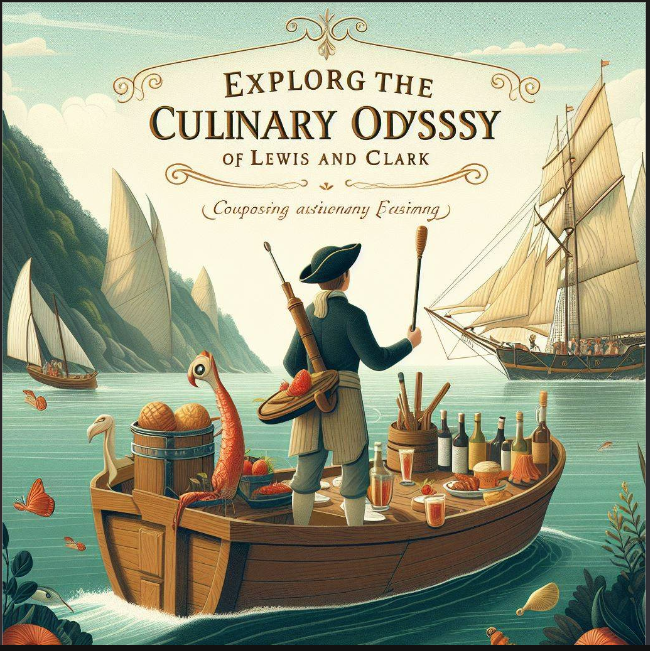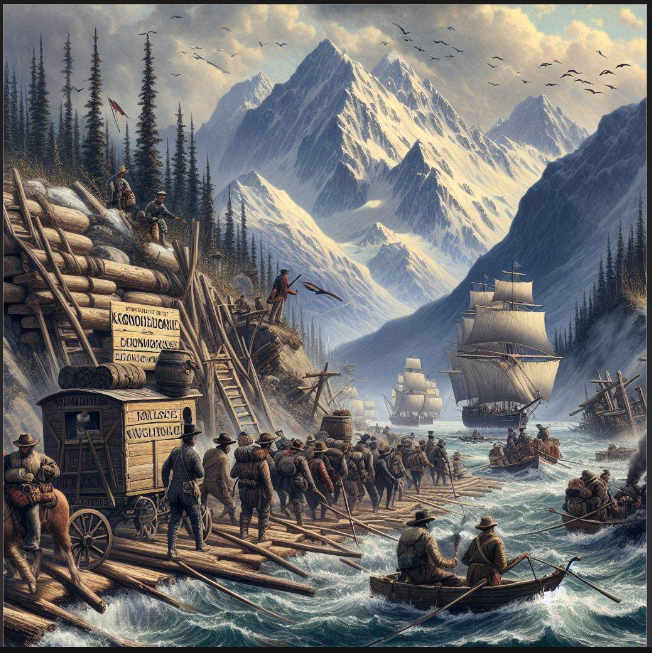
The Lewis and Clark expedition, led by Captain Meriwether Lewis and Lieutenant William Clark, stands as a monumental journey in American history. Undertaken between 1804 and 1806, this Corps of Discovery Expedition was not only a quest to find a direct water route to the Pacific Ocean but also an exploration of the economic potential of the newly acquired western territories. While the expedition faced various challenges, one of the critical aspects was ensuring the sustenance of the 33 men who embarked on this historic mission.
Examining What Lewis and Clark Consumed:
Each of the 33 men on the Lewis and Clark expedition ate 9 pounds of meat per day. (4 deer, or an elk and a deer, or one buffalo.). Slightly misleading. They had periods of little to no food also. When game was plentiful they had UP TO 9lbs of meat recorded eaten by at least 1 individual. But that is also not by every member even when it was plentiful. It takes a lot of meat to feed this many men over such a long period of time with such great caloric expenditures as they had. But also don’t think that every single man had 9lbs of meat every day for over 4 months.. They almost starved to death in the end. They came out of the mountains starving and were introduced to several species of salmon by the native peoples. Over the course of the trip they ate:
“Deer (all species combined) 1,001; Elk 375; Bison 227; Antelope 62; Bighorn sheep 35; Bears, grizzly 43; Bears, black 23; Beaver (shot or trapped) 113; Otter 16; Geese and Brant 104; Grouse (all species) 46; Turkeys 9; Plovers 48; Wolves (only one eaten) 18; Indian dogs (purchased and consumed) 190; Horses 12.”
Diving into the narrative of the culinary journey undertaken by Captain Meriwether Lewis and Lieutenant William Clark, commonly known as Lewis and Clark, sheds light on the intricacies of their diet during the renowned Corps of Discovery Expedition. This expedition, commissioned by President Thomas Jefferson, aimed not only to discover a direct water route to the Pacific Ocean but also to explore the economic potential of various regions, focusing on plant and animal life. Embarking on this historic mission on May 14, 1804, with a team of 31 men, Lewis and Clark faced the challenges of navigating through uncharted territories, both by water and on foot.
Ensuring the health and sustenance of the expedition members became a paramount concern. The journey, spanning from Camp Dubois near Hartford, Illinois, to Fort Clatsop in what is now Astoria, Oregon, demanded meticulous planning. Anticipating times when wild game might be scarce, the keelboat was provisioned with nearly 7 tons of dry goods, including flour, salt, coffee, pork, meal, corn, sugar, beans, and lard. Additionally, approximately 93 lbs. of portable soup, a gelatinous concoction dried to hardness, were carried, serving as a vital but hardly preferred sustenance that averted starvation on more than one occasion.
The physical demands of the expedition were evident in the quantity of food consumed. Captain Clark noted on July 13, 1805, that the men consumed an enormous amount of meat, with each individual requiring four deer, an elk and a deer, or one buffalo to sustain them for a day. In times of abundant wildlife, each man could consume up to 9 pounds of meat daily, providing essential protein crucial for their stamina in pulling canoes and bearing heavy loads. The types of meat varied according to the season, terrain, and climate encountered, showcasing a diverse menu ranging from bison and deer on the Great Plains to salmon and Wapato west of the Rocky Mountains.
The plains grizzly bear gave the Lewis and Clark expedition fits. They had to shoot one bear 11 times before it died. The plains grizzly bear, now extinct, could out run a buffalo.
I don’t think the plains grizzly bear is extinct, just retreated back to the mountains. Grizzly bear went to where the food was at. Without the large plains herds to prey on they had to adapt or die out. They would survive on the plains today preying on livestock if the Farmers/Ranchers didn’t have rifles to prevent it as well. There used to be bison in the forests on the East Coast when white people started settling there.
I have walked within 50 yards of mule deer many times to the point you wonder why the indians didn’t kill them all.
I’ve been close to many animals in the wild without them knowing or sometimes caring I was there. The reason Indians didn’t kill them all is the simple fact they didn’t kill more than they could use.
The Lewis and Clark expedition was the first major North American exploration to take whiskey instead of rum. It was whiskey made from corn, which was American-born whiskey.
President Jefferson wanted everything American taken on the trip to be presented or traded to the Indian tribes and this also included whiskey. Lewis embarked with 120 gallons for the trip. This was straight bourbon whiskey which would have been 100 to 160 proof. Sometimes they mixed it with blackstrap molasses into a drink called “skull-pop” or “skull varnish”. Through the years since Lewis and Clark’s expedition, whiskey has been taken as a beverage by armies and by campers . A modern version of “skull pop” is called Little Big Muddy.
Fish, particularly the eulachon or candlefish, held a special place in their diet, with Lewis praising it as “superior to any fish” he had ever tasted. At Fort Clatsop, elk became a staple, prepared in various forms such as boiled, dried, and roasted for breakfast, lunch, and dinner. The expedition members even extracted salt from seawater to enhance the flavor of their meals and extend the shelf life of perishable meats.
While the journey involved hunting and gathering to replenish their food supply, the Corps of Discovery also strategically brought tradable goods to exchange with Native American tribes for assistance. These tribes played a crucial role during times of food scarcity, providing essential items like squash, beans, corn, and carbohydrates from the starchy Wapato.
The inclusion of French-Canadian fur trapper Toussaint Charbonneau and his wife Sacagawea further enriched the culinary experiences of the expedition. Sacagawea, belonging to the Shoshone tribe, introduced the men to edible plants and roots, expanding their repertoire to include currants, wild licorice, and wild onions.
Cooking duties were shared among the expedition members, and the unfamiliar ingredients often prompted creative culinary endeavors. The journals reveal instances of dining on “burrowing squirrels,” which were found to be “well flavored and tender.” In times of need, the explorers bartered with Native American tribes for dogs, a novel meat source. Toussaint Charbonneau’s boudin blanc, a sausage made from stuffed buffalo intestine, impressed the hungry travelers, showcasing their adaptability to new culinary experiences.
Lewis occasionally treated his men to suet dumplings made from boiled buffalo meat, and during a food shortage on August 14, 1805, a mixture of cooked flour and berries served as a makeshift pudding, earning praise even from Native American chiefs.
Ultimately, the resourcefulness of the expedition members and the incorporation of a wide variety of native foods sustained Lewis, Clark, and their team throughout the challenging journey. Their diverse culinary experiences became an integral part of the legacy of the most famous expedition in U.S. history.
Plains natives during the time of the Lewis and Clark expedition were limited by their technology on the impact they would have on local game populations. If an area became overhunted by them or by predators they would have to move on to areas of more abundant game.
I would also imagine (since there were no game biologists there taking census numbers) that the game populations of that time followed localized boom and bust patterns similar to remote areas today which see little or no human impact. Game populations would rise, followed closely by predator numbers, range holding capacity would eventually become degraded along with increased predation disease etc. and the prey population would begin a decline, sometimes precipitous. Been happening for a gazillion years.
If one wants to read an eye opening story about the technology chasm between the Lewis and Clark expedition and the natives they encountered, find the account where Nez Perce hunters spent hours chasing a small band of pronghorns within view of a parlay between the Expedition and the Nez Perce Cheifs. A couple expedition hunters were then dispatched with long rifles and had two of the animals down within minutes.
I’m also of the opinion that had the Nez Perce been in possession of those rifles, they would have had at least the same deleterious effect on local game populations as did the Expedition.
List of Game Killed by the Lewis and Clark Expedition (May 14, 1804 – September 24, 1806):
Calculating the total calories for the list involves making some assumptions and approximations, as the caloric content can vary based on preparation and specific cuts of meat. Here are some general estimates:
- Deer (all species combined) — 1,001 (assumed to be white-tailed deer): ~146,000 calories
- Elk — 375: ~71,250 calories ea
- Bison — 227: ~45,400 calories ea
- Antelope — 62: ~12,400 calories ea
- Bighorn Sheep — 35: ~7,000 calories ea
- Grizzly Bear — 43: ~6,450 calories ea
- Black Bear — 23: ~3,450 calories ea
- Beaver (shot or trapped) — 113: ~16,950 calories ea
- Otter — 16: ~2,400 calories ea
- Geese and Brant — 104: ~26,000 calories ea
- Ducks and Coots — 45: ~11,250 calories ea
- Grouse (all species) — 46: ~9,200 calories ea
- Turkeys — 9: ~2,700 calories ea
- Plovers — 48: ~12,000 calories ea
- Wolves (only 1 eaten) – 18: ~2,700 calories ea
- Indian dogs (purchased and consumed) — 190: ~57,000 calories ea
- Horses — 12: ~15,000 calories (assumed similar to other game meats) ea
Now, for the additional provisions:
- 14 bags of Parchment of 2 bu. — 1,200 lbs: ~4,320,000 calories (assumed similar to wheat flour)
- 9 bags of Common Meal of 2 bu. — 800 lbs: ~2,880,000 calories
- 11 bags of Corn – hulled of 2 bu. — 1,000 lbs: ~3,200,000 calories
- 30 half barrels of Flour + 2 bags — 3,400 lbs: ~11,280,000 calories
- 7 barrels of Biscuit — 560 lbs: ~2,240,000 calories
- 7 barrels of salt — 750 lbs: 0 calories (salt)
- 50 kegs of Pork — 3,705 lbs: ~11,115,000 calories
- 2 boxes of candles & 50 lbs of soap — 170 lbs: ~340,000 calories (assumed similar to tallow)
- 1 bag of candle wick — 8 lbs: 0 calories (candle wick)
- 1 bag of coffee — 50 lbs: ~85,000 calories
- 1 bag beans and 1 bag of peas — 100 lbs: ~144,000 calories
- 1 bag of sugar — 112 lbs: ~404,000 calories
- 1 keg of hog’s lard — 100 lbs: ~368,000 calories
- 4 bundles of Hulled corn — 600 lbs: ~192,000 calories
- 1 bundle of meal — 150 lbs: ~480,000 calories
- 600 lbs of Grease — 6 lbs: ~48,000 calories 600lbs×453.592g/lb×9cal/g =2,432,353.6 Calories
- 50 bushels of mean — ? (caloric content not provided)
- 24 bushels of Natches corn hulled — ? (caloric content not provided)
Keep in mind that these are rough estimates, and actual caloric content may vary based on factors such as cooking methods and specific food types. Additionally, the caloric values for some items are not provided due to missing information.
(Note: The weights for “50 bushels of mean” and “24 bushels of Natches corn hulled” are not provided in the source.)
Food: Sustaining Life in the Unknown
The Corps of Discovery faced the immense challenge of procuring sustenance in unfamiliar landscapes. While the expedition carried supplies, the reliance on hunting, fishing, and foraging became crucial for survival. The team had to adapt to the diverse ecosystems encountered, varying from the lush woodlands of the East to the expansive plains of the West.
Thru-hiking, a modern-day adventure of long-distance trekking, shares this challenge. Thru-hikers traverse through different environments, necessitating strategic planning for food supplies. While modern hikers don’t rely on hunting as the Corps did, they must carefully choose lightweight, nutrient-dense foods to sustain them during their extended journeys. The link lies in the fundamental need to adapt and plan for nutritional requirements in unpredictable and often remote locations.
Daily Mileage: The Rhythm of Progress
Covering an average of 15 miles per day, Lewis and Clark meticulously progressed through the unknown. The daily mileage not only measured their physical endurance but also reflected their determination to chart the vast, unfamiliar territories. It was a balance between pushing forward and ensuring the expedition’s sustainability.
Thru-hikers face a similar challenge. While they may not be blazing entirely new trails, they set daily mileage goals, navigating through diverse landscapes and weather conditions. The rhythm of daily travel becomes a measure of their progress, mirroring the determination displayed by Lewis and Clark. The struggle to find the right balance, pushing forward without compromising endurance, connects these two adventures separated by centuries.
Obstacles Encountered: Nature’s Trials
The Lewis and Clark Expedition encountered an array of obstacles, from treacherous river rapids to the formidable Rocky Mountains. Their journey was marked by interactions with indigenous peoples, wildlife encounters, and the constant struggle to adapt to the unknown. The obstacles were not only geographical but also cultural and environmental.
Thru-hikers contend with their own set of challenges. From navigating challenging terrains to enduring inclement weather, they face nature’s trials. Just as Lewis and Clark had to find ways to overcome the obstacles presented by uncharted territories, thru-hikers must navigate established yet demanding trails. Whether it’s steep ascents, river crossings, or the mental challenges of solitude, the spirit of overcoming obstacles in the face of the natural world is a shared theme.
Conclusion
The Lewis and Clark Expedition, with its emphasis on exploration, adaptation, and resilience, resonates with the spirit of modern thru-hiking. The common threads of food procurement, daily mileage as a measure of progress, and the constant negotiation with nature’s challenges create a timeless connection between these two adventurous pursuits. Both endeavors showcase the indomitable human spirit to explore the unknown, bridging the gap between historical exploration and contemporary adventure.
In essence, the Lewis and Clark expedition’s culinary journey was a testament to adaptability, resourcefulness, and the intricate interplay between exploration, sustenance, and the diverse ecosystems encountered. It remains an enduring chapter in the annals of American history, showcasing not only the challenges faced by early explorers but also the rich tapestry of culinary experiences woven into their epic journey.