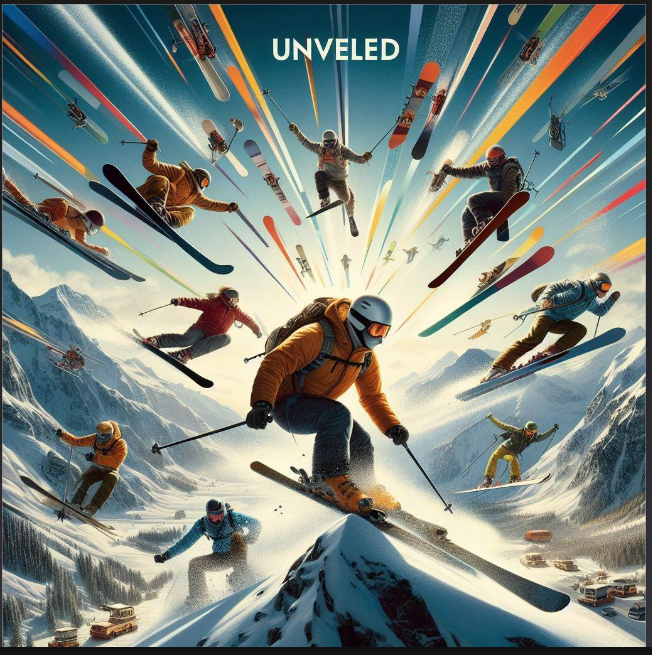
Skiing, a popular winter sport that involves gliding across snow-covered landscapes, encompasses a diverse array of styles, each with its unique techniques and equipment. While the familiar image of downhill skiing, also known as alpine skiing, involves cruising down groomed runs at lift-assisted resorts, the world of skiing expands far beyond this well-known form.
Downhill Skiing: Downhill skiing, often referred to as alpine skiing, is the quintessential skiing experience for many enthusiasts. Practiced at ski resorts with designated runs, this style involves navigating groomed slopes with marked trails and patrols. Downhill skiers wear stiff plastic boots that secure into fixed-heel bindings mounted on shaped skis. The descent is characterized by keeping skis parallel while executing turns.
Essential gear: downhill skis, downhill bindings, downhill boots, downhill poles
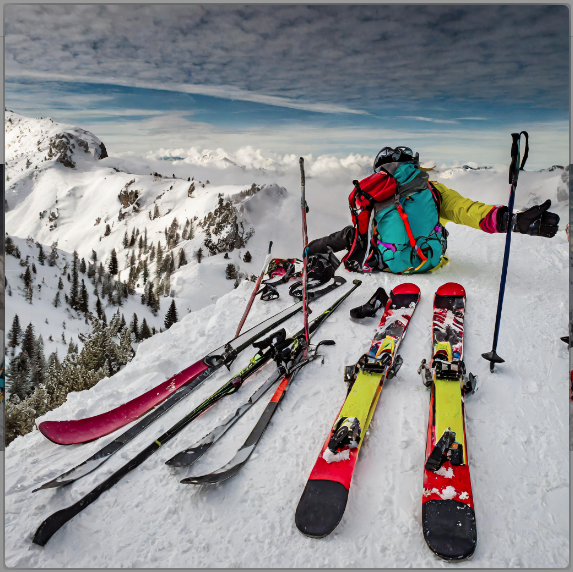
Backcountry Skiing: Venturing beyond the patrolled boundaries of ski resorts, backcountry skiing, or off-piste skiing, introduces a sense of adventure and exploration. Skiers may opt for alpine touring or telemark gear, using climbing skins and bindings with a free-heel feature for uphill and downhill travel. Proper avalanche safety equipment and training are imperative for those venturing into the backcountry.
Essential gear: backcountry skis, backcountry boots, backcountry bindings, backcountry poles, climbing skins, avalanche safety equipment
Alpine Touring: A specialized subset of backcountry skiing, alpine touring (AT) involves using bindings that seamlessly switch between free-heel and fixed-heel modes. Climbing skins provide traction for ascending slopes with unlocked heels, and upon reaching the summit, skiers transition to a downhill descent, employing parallel turns akin to downhill skiing.
Essential gear: backcountry skis, backcountry boots (or alpine touring boots), backcountry bindings (or alpine touring bindings), backcountry poles, climbing skins, avalanche safety equipment
Telemark Skiing: Telemark skiing is a distinctive form where skiers use specialized bindings and boots. The heel remains unlocked at all times, and turns are executed with a lunging motion that positions the forward leg in a bent-knee stance. This technique, often applied with backcountry skis, can be enjoyed both at downhill ski resorts and in the backcountry, requiring additional equipment and proper avalanche training for the latter.
Essential gear: backcountry skis, telemark boots, telemark bindings, backcountry poles
Ski Mountaineering: Ski mountaineering focuses on reaching the summit of peaks and descending. Alpine touring equipment is typically used, accompanied by additional tools such as ski crampons, boot crampons, an ice axe, and a rope for navigating snowy slopes and glaciers.
Essential gear: backcountry skis, backcountry boots, backcountry bindings, backcountry poles, climbing skins, avalanche safety equipment
Cross-Country Skiing: Also known as Nordic skiing, cross-country skiing offers a different experience on rolling landscapes. Skis are long and skinny, and boots attach via bindings that allow heels to lift. Classic skiing involves parallel kicks and glides, while skate skiing employs a side-kicking motion. Both styles require human power for hill climbing, making it distinct from lift-assisted downhill skiing.
Essential gear: cross-country skis, cross-country boots, cross-country bindings, cross-country poles
Freestyle Skiing: Freestyle skiing is an acrobatic expression of the sport, featuring moguls, jumps, and aerial maneuvers like twists and somersaults. Typically performed at downhill ski resorts, this style necessitates gear similar to downhill skiing.
Essential gear: downhill skis, downhill bindings, downhill boots, downhill poles
Adaptive Skiing: Tailored for individuals with disabilities, adaptive skiing utilizes special equipment such as monoskis or sit skis. Many ski resorts offer adaptive programs to facilitate an inclusive skiing experience.
Essential gear: adaptive ski equipment