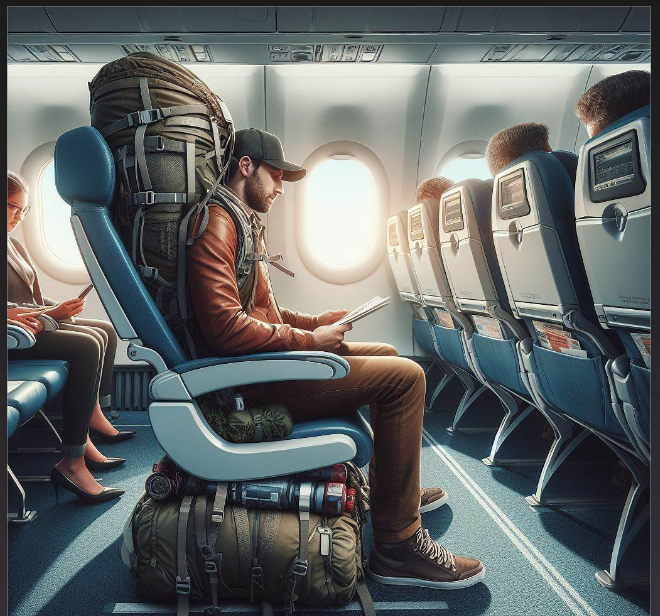
If you’re a long-distance hiker or backpacker planning to fly with your gear, follow these tips for a hassle-free experience: Having your hands free and one bag on your back seems life changing…if you travel a lot.
With regards to the total weight I think the difference between a bag 30L to 45L range, the 1 to 2 lbs difference is not really that big. It really depends on personal preferences and physical ability. Are you standing in slow moving lines for a longer duration? Is your back, core, knees, and/or pelvis in good condition? Are you at least average size and weight? If you fly carriers which will weigh & size carry-ons and personal items, it can be very frustrating to have to check a one bag due to it being overweight or start pulling things out to wear them through the bag check. Most people will need to optimize their contents if carrying a 35-40L bag and want to be under 7kg including laptop.
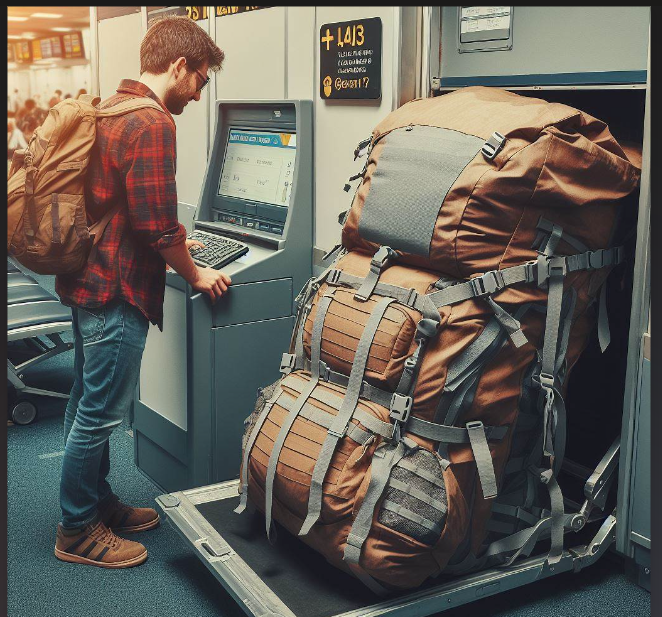
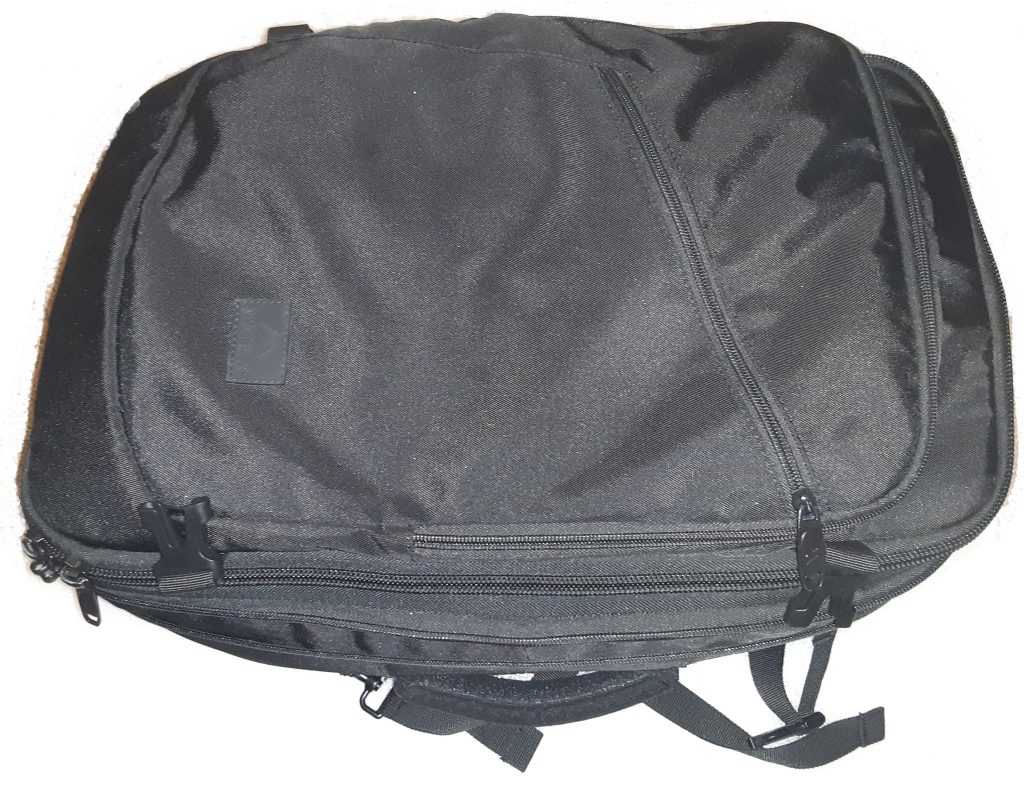
Here is a Matien 40L (expandable to 45L) backpack suitcase that is within most Major Airline Carrier guidelines for a carry on bag, this setup is TSA compliant has enough gear to sleep 2 people and ideal for rental car camping. Although, you could use the backpack for day hikes if you parked some of your gear at base camp ahead of time. This bag is on the heavier side (2.4lb empty), but for the price under $50, it is a bargain given the large volume of gear it fit inside. Dimension:22x9x14inch
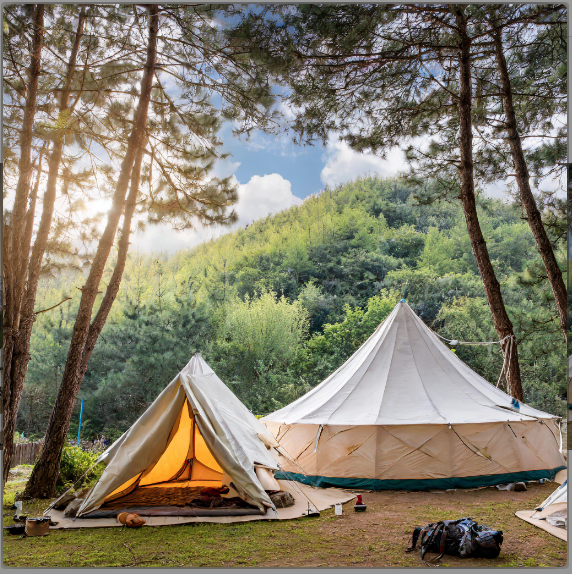
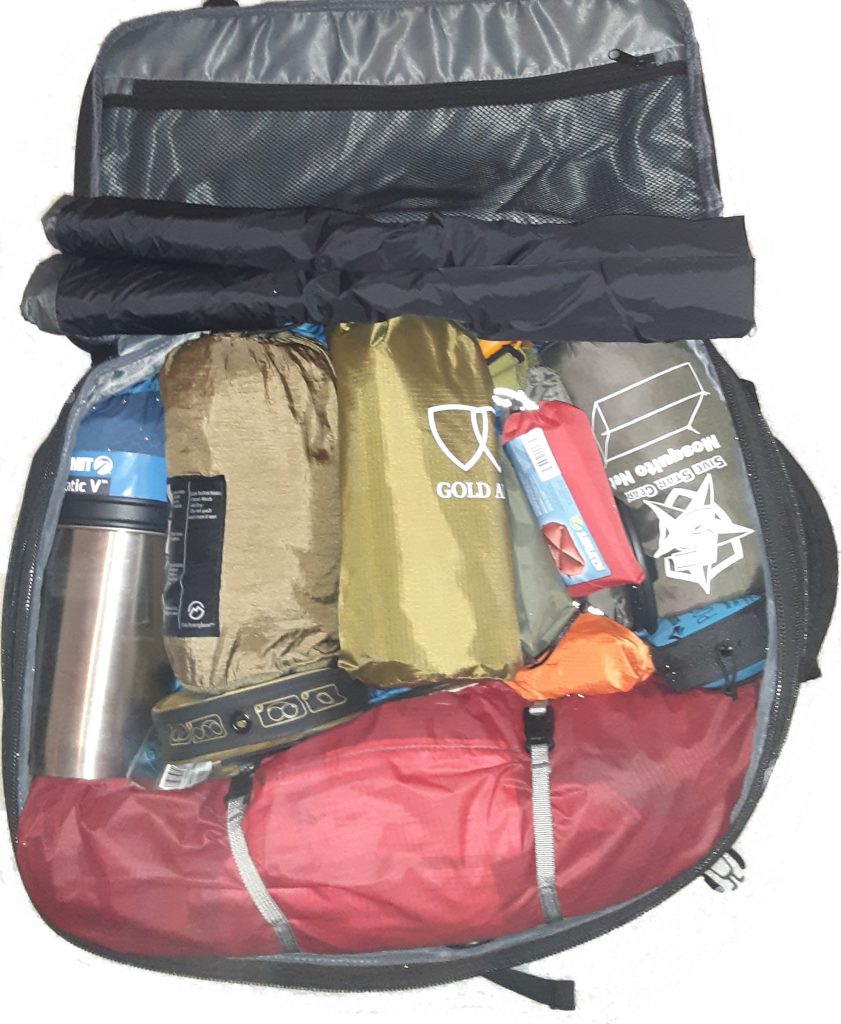
Packed inside you will find a full hammock setup (w/ bug screen), MSR Hubba NX 3 season freestanding 1 person tent, Kylmit Static V sleeping pad, 32oz Stanley boil N Brew french press, titanium alcohol stove, synthetic down quilt (78.74″×51.18 packable), large tarp (12ftx10ft polyester), Kylmit X pillow, Sea to Summit Air Chair, Sea to Summit Kitchen Sink, Sea to Summit shower, Scrubba wash bag. Energizer L.E.D headlamp, Life-Straw (& iodine tablets), 25ft 550 paracord rope, 1.5L Camel-Bak water bladder, ETROL Quick Dry Towel, MSR Piezo Ignitor, BIC lighter, Rain Poncho, long titanium spork, small first aide and misc camping supplies. This is enough gear to show up and camp virtually anywhere above 50f degress, you’d have to add a sleeping bag in your personal bag for cold weather camping. For 2 people consider hanging a tarp high, then a hammock above your tent and that would allow for one person in the tent and one in the hammock (dont forget to pack a second blanket/pad separately). Clothes combined in compression cubes in the other persons pack or in your personal item bag -under the seat.
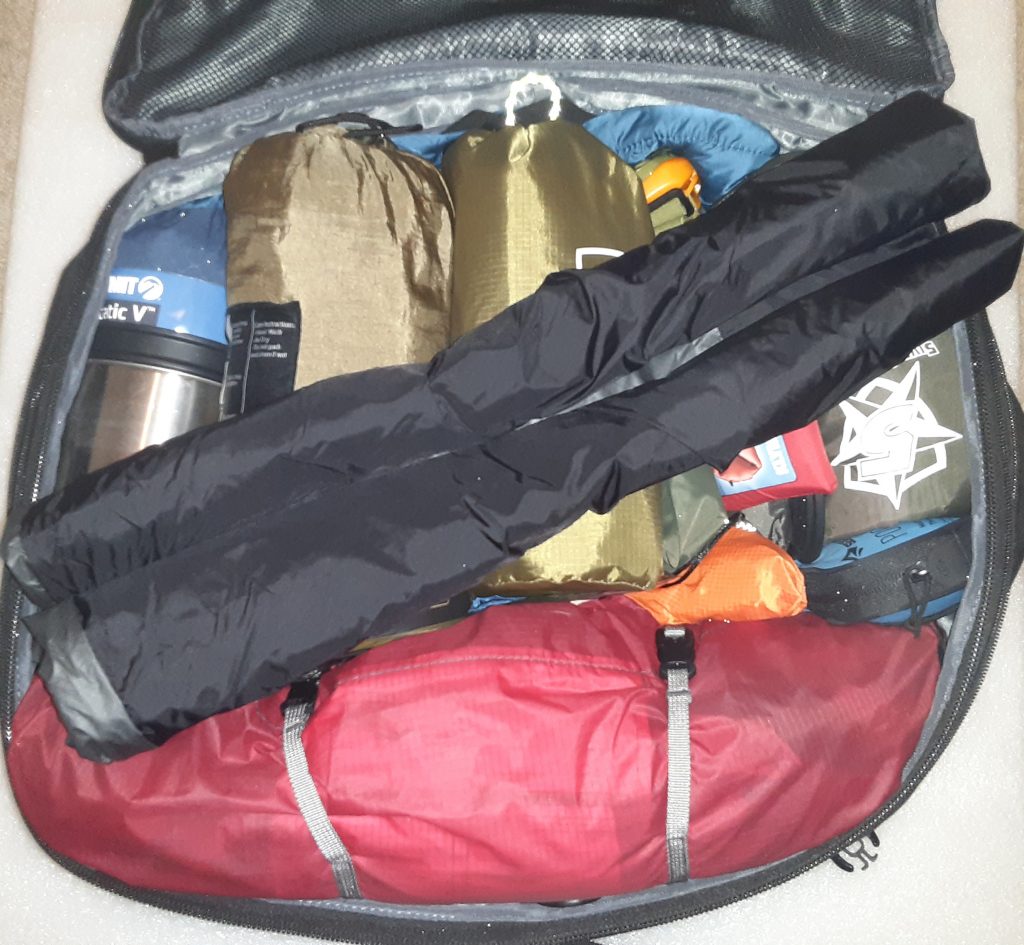
Pro Tip: If solo camping, add layers to your quilt: Wrap up in the hammock and poncho for extra warmth while in the tent for those extra cold nights. Don’t forget your neck scarf, beanie and thin gloves!
- Learn from Past Experiences:
- If you’ve had issues with checked luggage, consider hiding your backpack within a duffel or laundry bag to avoid any problems. Usually if the flight is full there is more scrutiny when it comes to bags. They may have you put it in the box to see if it fits.
- Minimize Metal Objects:
- Reduce the size and number of metal objects in your gear. Leave items larger than a backpacking stove and hatchet at home, and remember that transporting fuel is not allowed.
- Packing Strategy:
- Consider using a large duffel bag for your gear. Ensure everything fits well, and consider using dry bags or contractor garbage bags to protect your backpack.
- Use compression cubes and travel shirt folders.
- Dimension and Weight Restrictions:
- Be aware of weight restrictions and potential dimensions for checked luggage. Some airlines have specific limits, so check in advance to avoid surprises.
- Day Packs as Carry-Ons:
- Utilize day packs as carry-ons for essential items, including a warm jacket, a change of clothes, and anything with batteries.
- Mailing Camping Gear:
- If cost-effective, mailing camping gear in advance can be a practical option, especially for smaller items. Check with the local post office for general delivery services.
- See our article on Mailing Gear: https://taketent-4y20k2jntb.live-website.com/guide-to-mailing-care-packages-and-resupplying-effectively
- Pack a Tyvek “If it fits it ships” pre-paid USPS addressed to yourself to mail souvenirs home.
- Pack postage stamps to mail post cards to your love ones; finding stamps on the trails is tough!
- Choosing the Right Suitcase:
- Find a suitcase or duffel that fits your fully loaded pack, making it inconspicuous and preventing straps from catching on conveyor belts.
- Liquid and Pressurized Items:
- Remove liquids, fuels, and pressurized items before packing. Purchase such items at your destination to comply with airline regulations.
- Wear Bulky Items Onboard:
- Wear hiking boots and bulky clothing onto the plane to save baggage space.
- Check Airline Baggage Limits:
- Research and understand your airline’s baggage limits, including weight and dimensions. Adjust your gear accordingly to avoid excess luggage charges.
- Protecting Gear:
- Wrap delicate gear in layers and use your clothing or sleeping bags as insulation. Ensure that electronic or hard gear is well-protected.
- Inspect Gear Upon Arrival:
- Set up your gear immediately upon arrival to uncover any issues, especially with tent poles, before you embark on your trip.
- Concerns with Personal Luggage:
- Be mindful that visible large personal luggage might lead to a check. Ensure it fits into overhead storage or meets airline guidelines.
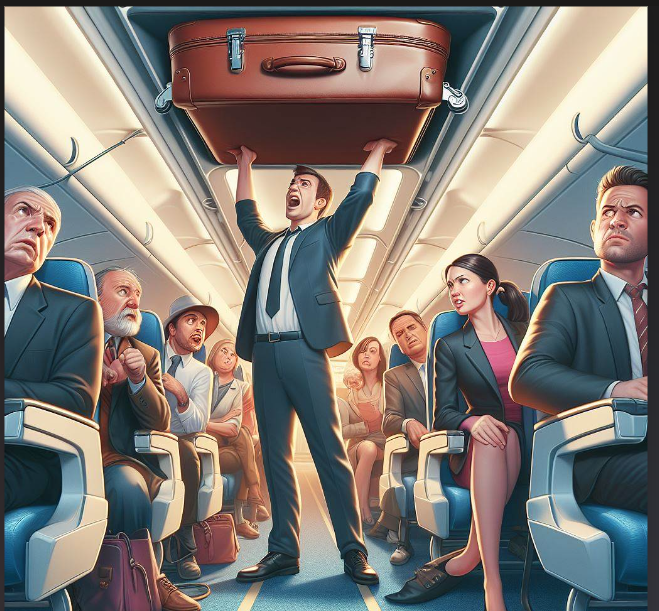
14. Carry-On Considerations:
- Confirm that your carry-on fits both the overhead bin and personal bag under the seat. Gate agents typically eyeball personal items, so a laptop bag should be acceptable.
- Depends on the airline, their level of enforcement and how much you want to risk a gate check fee. A 40 liter + size bag is simply not an option as a personal item. Not only will you have your knees up to your chin, it will create a hazard for quick exit in an emergency. Just pay the extra fee for checked bag.
- If you can cram it under the seat you are fine. If it sticks out too far the FA may call you on it. I think what an FA would be looking for is whether the item would impair getting out of the seat / tripping someone, particularly during an emergency. Just a PSA. Spirit lists their personal bag measurements as 18 x 14 x 8. Frontier lists their personal bag measurements as 14 x 18 x 8. You would think this would mean that the same bag could fit in the same slots right? Unfortunately you’d be wrong. This may just be personal experience but I’ve flown out of six airports recently and it seems like in all of them either Spirits baggage measurement carts are bigger than their stated measurement (or correct) or Frontiers baggage measurement carts are smaller than their stated measurement (or correct) but either way Frontier seems to make it a point to have people measure their bags for that unexpected gate baggage upgrade charge compared to Spirit. Just be aware if your bag appears borderline. 18”x14”x8”. How the dimensions are ordered are meaningless. There have been reports with Frontier gate agents not allowing “squish” and requiring that the bag slide into the sizer unassisted. Their gate agents get a commission for every bag that gets gate checked. Says 11x17x4.5 online. Totally fine for frontier. Make sure to cinch it down before boarding just in case.
- Southwest Airlines allows 1 Carry-On Bag 24” (L) + 16” (W) + 10” (H). . Additionally, one small personal item is permitted. It must not exceed 18.5 x 8.5 x 13.5 Inches, and needs to fit under the seat in front of you. 2 checked bags free! A tent can be checked. As long as it’s under 62 linear inches, it can be counted as one of your two free bags. We’ve checked ez-up canopys before with no problem. I also checked my stand up paddleboard bag twice last week (which was right at the 62 inches) and no one thought twice about it or tried to measure it. American Airlines: 18 x 14 x 8 inches Your personal item like a purse or small handbag must fit under the seat in front of you. Dimensions should not exceed 18 x 14 x 8 inches (45 x 35 x 20 cm). These don’t count as your personal item or carry-on: Diaper bags (1 per child) Delta Personal Item Size Delta underseat dimensions are 20 inches X 15 inches X 11 inches (55 cm X 38 cm X 28 cm) on most aircraft. To ensure your personal item fits these dimensions, choose an item that is 17 inches X 13 inches X 9 inches (43 cm X 33 cm X 23 cm) or smaller. 22 cm x 25 cm x 43 cm Personal items These items must fit under the seat in front of you, so they must be 9 in x 10 in x 17 in (22 cm x 25 cm x 43 cm). A “legal” Ryanair bag needs to fit their 42x30x20cm (16.5”x11.8“x7.9”) sizer box (25 liters). The Cabin Zero Classic 28 is made for that. It’s not 28 liters either. Enforcement is lax but possible. If they do check and you don’t pass, the gate check fee is €69 and your bag goes away, hopefully to be picked up at baggage claim. Common things include purses, backpacks and laptop bags. If you’re at the airport and not sure if your bag is the right size, you can use our bag sizers to measure your bag. What are the dimensions? Like some people try to argue “it’d be totally fine” when it really wouldn’t. If it’s like 10x11x18 you’re totally fine. If it’s like 14x15x22 you’re probably gonna be asked about it. Like my bag is technically too big (basically the 1” too big that i mentioned), not once have I even been asked about it in probably close to 100 flights since I got it.
By following these guidelines, you can navigate air travel with your backpacking gear smoothly and focus on enjoying your outdoor adventure.