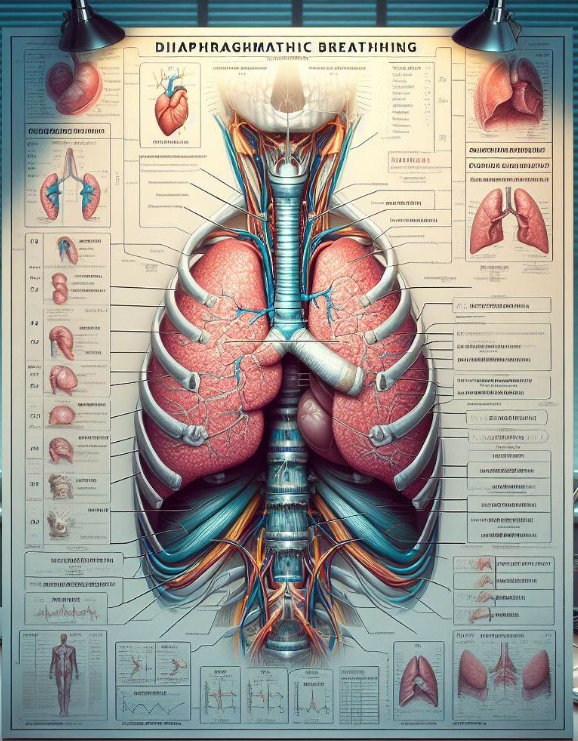
Introduction: Diaphragmatic breathing, also known as abdominal or belly breathing, is a technique utilized not only by freedivers but also by athletes, singers, and performers. It involves activating the diaphragm, a crucial muscle at the base of the lungs, to enhance respiratory efficiency. This article explores the benefits of diaphragmatic breathing, how to practice it, and its application in various fields.
Benefits of Diaphragmatic Breathing:
- Lowering Heart Rate and Stress Levels: Diaphragmatic breathing triggers the diaphragm’s contraction, leading to a deeper inhalation and increased lung capacity. This helps in lowering heart rate and stress levels by promoting relaxation.
- Efficient Breathing: The technique allows the lungs to expand fully, making the breathing process more efficient. This is essential for activities such as freediving, where optimal oxygen utilization is critical.
- Preparation for High-Stress Situations: Diaphragmatic breathing is a valuable tool for managing high-stress situations, making it beneficial in various settings, including the workplace.
How to Practice Diaphragmatic Breathing: Follow these steps to practice diaphragmatic breathing effectively:
- Positioning: Sit or lie down comfortably.
- Hand Placement: Place one hand on your chest and the other on your stomach, just below the ribs.
- Shoulder Relaxation: Relax your shoulders and release tension throughout your body.
- Inhalation: Inhale slowly and deeply through your nose, allowing your stomach to expand.
- Exhalation: Exhale slowly through pursed lips, creating a gentle ‘Sss’ sound, and feel your stomach contract.
- Repetition: Repeat the exercise for 10-15 minutes daily.
Breathing Ratios: Experiment with different inhalation and exhalation ratios to find what works best for you. Consider the following ratios based on body type:
- Smaller body type: 4 seconds in, 8 seconds out
- Medium body type: 5 seconds in, 10 seconds out
- Larger body type/broad shoulders: 6 seconds in, 12 seconds out
Segmented Breathing – Dry Practice: Enhance respiratory capacity by incorporating segmented breathing into your routine:
- Nasal Breathing for Relaxation: Breathe through your nose to stimulate the parasympathetic nervous system.
- Diaphragm Pushups: Strengthen the diaphragm with controlled inhalation and exhalation.
- Nose Breathing During Exercise: Inhale and exhale through your nose during physical activity to improve oxygen assimilation.
- Sama Vritti Pranayama: Balance inhales and exhales with this yogic exercise, gradually increasing the count.
Safety Precautions: Before delving into diaphragmatic breathing training, it’s essential to observe basic safety measures:
- Never Dive Alone: Always have an apnea and rescue-trained buddy.
- Dry Training: Dry breath-hold exercises are safer than wet training.
- Avoid Hyperventilation: Steer clear of hyperventilation as it can be dangerous.
- Progress Gradually: Dive within your limits and make steady progress.
A Practical Guide for Freediving Training: This comprehensive guide offers a step-by-step approach to improve breath-holding abilities over a one-month period. It covers six stages, including baseline assessment, breath-holding technique, and both anaerobic and aerobic training. It emphasizes the importance of proper preparation, breath-holding technique, and structured training tables.
Conclusion: Diaphragmatic breathing is a valuable skill with widespread applications, from stress management to enhancing athletic performance. Whether you’re a freediver, athlete, or someone seeking relaxation techniques, incorporating diaphragmatic breathing into your routine can lead to numerous benefits. Remember to prioritize safety, gradual progress, and the overall quality of your training for sustainable and effective results.