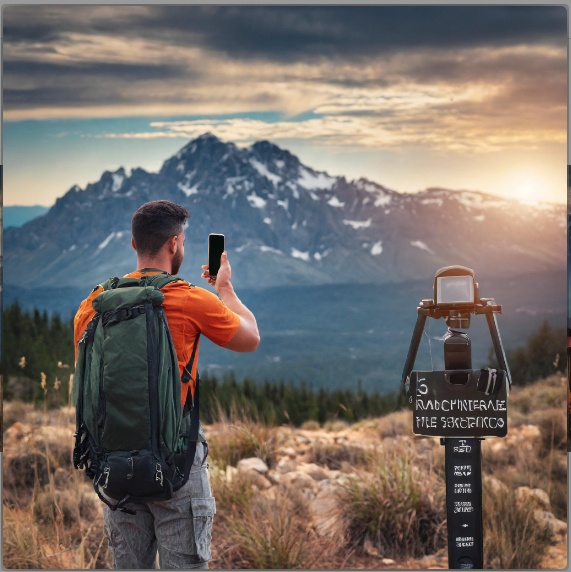
In the heart of the wilderness, a desperate call echoes through the vast expanse, “Hello, this is 911. Please state your emergency.” In the precarious world of backcountry adventures, the words uttered during this one call can determine the timeline of your rescue. As storms brew, signals fade, and batteries dwindle, the critical nature of that solitary call cannot be overstated.
Assume Your First Call Is Your Only Call: In the unpredictable terrain of the wilderness, communication can be disrupted by unforeseen circumstances. Search and Rescue (SAR) coordinator(s) with Fish and Game, emphasizes the importance of providing essential information in that initial call. Before dialing 911, jot down crucial details such as your name, the nature of the problem, general location, physical condition, and your cell number. Additionally, familiarize yourself with your surroundings, check the map, conduct an injury inventory, and take a deep breath. A composed and prepared caller is more likely to communicate effectively and provide accurate details.
Location Details Matter: When reaching out for help, SAR teams need to know your last known location. Whether it’s a trailhead, a lake, a road or river crossing, a summit, or a trail sign, focusing on known places is crucial. Lost hikers often misjudge their current position, underscoring the importance of providing additional details such as GPS waypoints, terrain conditions, sun position, types of nearby trees, river crossings, and distinctive landmarks. These details can significantly narrow down the search zone, enhancing the chances of a swift rescue.
Enable Your Phone for Maximum Effectiveness: Before embarking on your backcountry journey, activate your phone’s Search and Rescue (SAR)-friendly “Location” options found in the settings menu. Most modern phones, post-2005, are equipped with a GPS chip that aids emergency responders in determining your approximate position through cell-tower triangulation, satellite fixes, or a combination of both. Enabling the “Location” function for all calls, not just emergency calls, makes it easier for cell phone companies to locate you. Ensure call-forwarding and automatic voicemail are disabled, and keep your phone turned off and secured in your pack until necessary to preserve battery life.
Survival Secret: Extend Battery Life Strategically: In the dire straits of a survival situation, every bit of battery life counts. An ingenious tactic to maximize your cell phone’s battery life is to warm it in an inner pocket before turning it on to make a call. While storing batteries at cold temperatures is acceptable and won’t drain power, the warmth from your body can temporarily boost the battery’s efficiency when you need it most.
Conclusion: In the wilderness, where the elements are unpredictable and challenges abound, survival hinges on meticulous preparation and strategic decision-making. When reaching out for help through that one crucial call, providing comprehensive information and enabling your phone for maximum effectiveness can be the difference between a timely rescue and a prolonged ordeal. Embrace these survival strategies, and equip yourself with the knowledge to navigate the backcountry with confidence and resilience.