Embark on a journey alongside nature’s own pathfinders, tracing routes that elude conventional maps. The trail snaked along the edge of a cliff, a slender and precarious route that dangled perilously close to a 50 to 100-foot drop. Inches away from our heavily burdened bodies, the trail challenged us with each step. Swearing under my breath, I questioned the originators of this trail. “How did they navigate this terrain?” I pondered aloud amidst labored breaths. What motivated them to undertake such a venture?
For hours, my hiking companion and I had been navigating a series of trails, alternatively praising and cursing the sure-footed architects of this precarious alpine path. Were we at the mercy of a rogue trail crew? Quite the opposite; this trail was a gift, forged by the split hooves of myriad mountain goats seeking a secluded meadow. For us, the lush expanse at the base of a colossal ice field was an ideal campsite. For the mountain goats, it was a gourmet high-mountain feast.
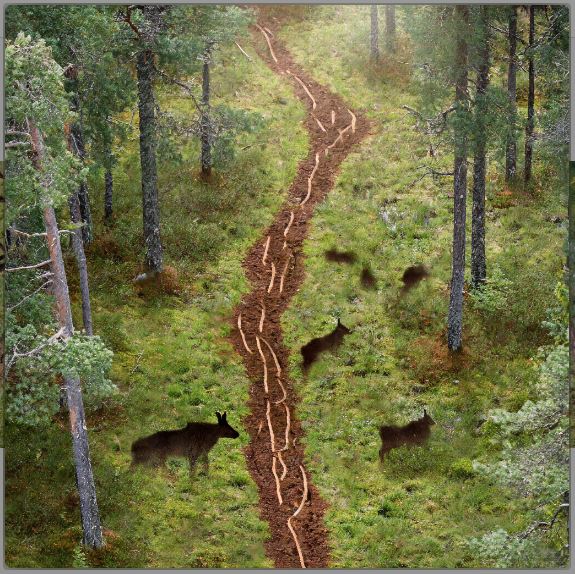
Traversing game trails can be a spectrum of experiences, from sheer convenience to exhilaration to occasional frustration. Yet, they hold undeniable value under specific circumstances, including:
- When navigating cross-country in trailless terrain.
- When forced to bushwhack due to poorly maintained trails.
- Opting for cross-country navigation over existing trails for an extra challenge.
- Reorienting yourself by finding a lake or stream crossing after becoming disoriented.
The key lies in aligning your goals with those of the resident trailblazers. What may appear haphazard to you often serves a greater purpose in an animal’s existence, driven by fundamental needs such as safety, sustenance, water, and reproduction. While your immediate concern might be reaching the next valley before nightfall, if that valley is a frequented feeding ground for local bighorn sheep, consider yourself fortunate.
Wildlife biologist, with over five years of tracking experience in Banff National Park, emphasizes that these trails are often passed down through generations. He compares it to knowing shortcuts to a friend’s house. Wes Bradford, warden of Jasper National Park, adds that animals navigate landscapes based on energy conservation, following weaknesses in the terrain to minimize energy expenditure. This instinct makes them reliable allies for backpackers.
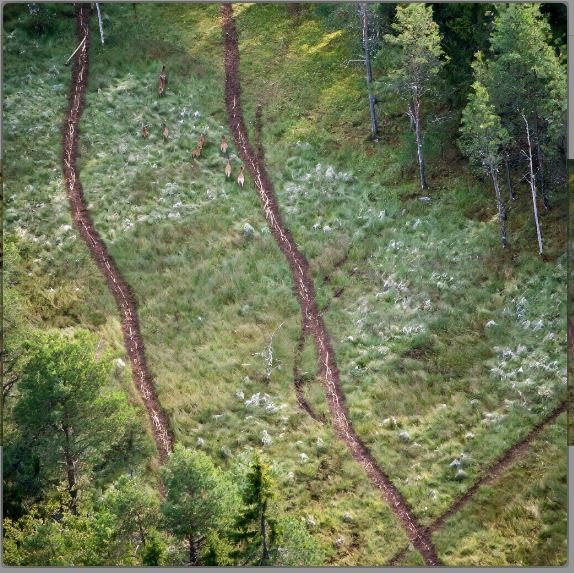
Game trails can be found wherever herd animals roam, occasionally utilized by bears, wolves, and coyotes. Above treeline, they offer stable footing on shifting talus slopes, saving hikers from descending into challenging forested areas. Below treeline, locating well-used animal pathways can be more challenging, but clues exist.
Ecologist working on wildlife tracking studies, suggests looking for game trails circumnavigating lakes and following major river systems in woodland areas. Animals tend to move between patches of available habitat, seeking water and food sources. Valleys often host game trails along water drainage.
When safety and a full appreciation of newfound routes are essential, it’s crucial to observe clues and identify the trail users before potential encounters. Here are some pointers:
- Frequent glances at the ground: Tracks, especially after rain or snowfall, reveal recent trail usage and aid in predator avoidance.
- Observing clearings beside the trail: Animals often bed down in these zones, leaving compressed beds, droppings, and signs of foraging.
- Inspecting trees for claw marks or hair tufts: Bears and bison use specific spots for scratching and marking territory, leaving distinct signs.
- Noting browse lines and distinctive marks: Deer and moose create noticeable signs by biting off twigs or bending saplings for leaves.
Whether actively seeking game trails or resorting to them in emergencies, remember that these networks are vital for wildlife survival. Respecting animals’ travel patterns is crucial, as disrupting their lifestyle can have serious consequences. If animals are spotted on the trail, maintain a safe distance and avoid causing them discomfort. Ultimately, traversing game trails is a unique exploration of nature’s hidden pathways, shaped over generations by its inhabitants.