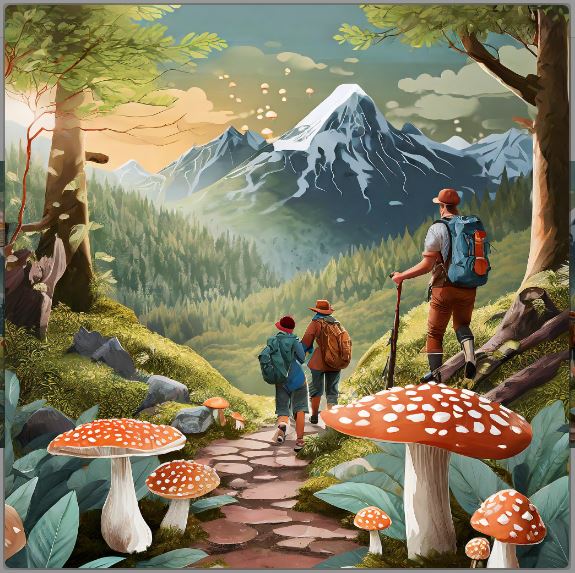
Embarking on a springtime adventure to discover the rich fungal wonders nestled in some of the country’s most captivating landscapes is an endeavor that promises both scenic beauty and mushroom diversity. Whether you are a seasoned forager or just starting out, these four hikes offer a delightful blend of breathtaking surroundings and the opportunity to explore the fascinating world of mushrooms.
- Bear Creek Trail – Chattahoochee-Oconee National Forests, Georgia
Nestled in the heart of the Chattahoochee-Oconee National Forests, the Bear Creek Trail is renowned not only for its majestic Gennett poplar, Georgia’s second-largest living tree, but also for the fungal treasures scattered along its path. This easy 2.2-mile out-and-back trail takes you through a lush, moss-covered forest, revealing the symbiotic relationship between the towering poplars and vibrant yellow-gold chanterelles. The Gennett poplar, standing tall at 100 feet, acts as a beacon for these sought-after fungi, flourishing near its massive 20-foot base.
- Boulder River Trail – Mt Baker-Snoqualmie National Forest, Washington
Venture into the temperate rainforests of the Pacific Northwest with the Boulder River Trail, an 8-mile journey through a spring-perfect gorge. Beyond the enchanting waterfalls that adorn the canyon, keep your eyes peeled for the elusive chicken of the woods, a bright-orange and yellow shelf mushroom. The trail, starting at French Creek Road, guides you through a dense forest habitat, offering ideal conditions for mushroom hunting. Remember to respect regulations as foraging is prohibited beyond the wilderness boundary.
- Burning Bear Trail – White River National Forest, Colorado
Colorado’s White River National Forest boasts over 3,000 mushroom varieties, making the pine woods along Burning Bear Trail a prime fungi habitat. After the spring rain and snowmelt, embark on an 11-mile out-and-back journey from the Geneva Creek trailhead. Scan for porcinis with their distinctive red-brown caps and fat, white stems in shaded areas near tree roots. Choose between a shorter 3.4-mile trek or continue for breathtaking views atop an exposed ridge overlooking Geneva Peak.
- Bruno’s Run Trail – Hiawatha National Forest, Michigan
Venture into Michigan’s Upper Peninsula and explore the Bruno’s Run Trail, a 9-mile loop that meanders past lakes and through deciduous forests teeming with morels. As April showers pave the way for May morels, follow the trail counterclockwise from Moccasin Lake. Take your time scanning hillsides for hollow-capped, brown-and-yellow mushrooms beneath elms and on decaying oaks. Different slopes host varying sizes of morels, with smaller ones in early spring on south-facing slopes and meatier specimens in late May on north-facing slopes.
Mushroom Foraging 101: Tips and Tricks
Before embarking on your mushroom foraging adventure, equip yourself with essential tips from a volunteer with the Mycological Society:
- Check Regulations: Before setting out, check and adhere to specific regulations at your destination, including quotas or required permits.
- Field Guides: Carry two field guides, especially one specific to the region you are exploring, and consider teaming up with an experienced forager.
- Positive Identification: Only consume mushrooms you can positively identify; never eat unknown varieties.
- Avoid Contaminated Areas: Avoid gathering in chemically treated areas or along roadsides, as mushrooms can absorb toxins.
- Specialized Tools: Use a specialized foraging knife to cut mushrooms above the ground.
- Sustainable Harvesting: Harvest only what you need, leaving small and old mushrooms behind to support sustainable foraging practices.
- Ventilated Containers: Carry mushrooms in a container with mesh netting or holes for proper ventilation, preventing them from becoming mushy during transport.
Embark on these hikes armed with knowledge and respect for nature, and you’ll uncover the incredible diversity of mushrooms flourishing in these captivating landscapes. Happy foraging!