Many of America’s most stunning and culturally significant places are designated as national parks, offering expansive, pristine landscapes for the public’s enjoyment. The concept of a national park is uniquely American and has roots in the nineteenth-century conservation movement. This article delves into the history of national parks, exploring their origins, the key figures involved, and the evolution of their preservation.
Yellowstone: The Pioneer The journey of national parks began in 1872 when Yellowstone was designated as the world’s first national park. This marked a significant milestone, setting the stage for the preservation of outstanding natural beauty and cultural heritage. The concept emerged from a growing appreciation for wilderness, wildlife, and a desire to escape the urbanization spurred by industrialization.
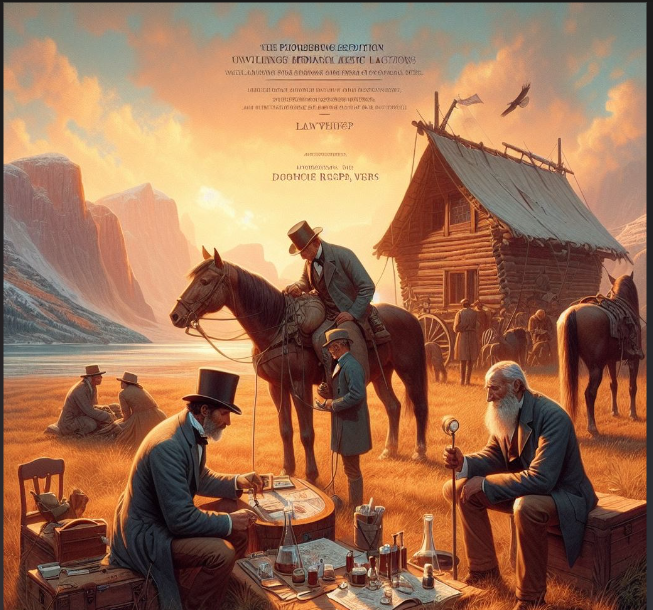
Pioneering Conservationists: The same decade that Yellowstone was established saw the emergence of influential conservationists and writers who played pivotal roles in the national park movement. Figures like Clarence Dutton, Ferdinand V. Hayden, Clarence King, Nathaniel P. Langford, John Muir, and John Wesley Powell contributed significantly by describing the breathtaking scenery of the western United States. Private organizations like the Appalachian Mountain Club and the U.S. Geological Survey also played roles in early conservation efforts.
The National Park Service: While Yellowstone was the first national park, it took until 1916 for the establishment of the National Park Service. Before that, various departments, including War, Agriculture, and the Interior, supervised parks, reserves, and monuments. The lack of coordinated policy and leadership led to challenges. The appointment of Stephen Tyng Mather as the first Superintendent of Parks in 1915 marked a turning point. Mather’s dynamic leadership transformed the poorly managed parks into the centrally administered National Park Service. This period saw the creation of iconic parks like Grand Canyon, Acadia, Bryce, Zion, Lassen, Hawaii, and Mount McKinley.
Evolution and Expansion: The national parks of today serve as public resources for recreation, education, scholarship, and the preservation of endangered landscapes and species. They are spread across twenty-five states and the Virgin Islands, encompassing diverse landscapes from the Everglades to Yosemite, Hawaii to Alaska. Some were generously donated by private individuals, while others were protected from development and exploitation.
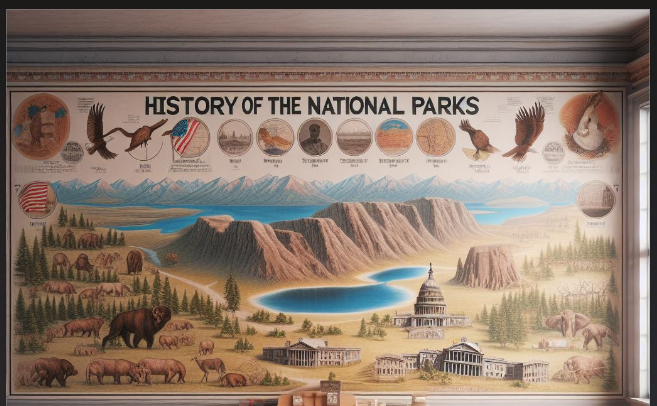
Mapping the Parks: An essential part of each national park’s story lies in its maps. From the initial stages of discovery to accurate mapping, these maps document the establishment, growth, and unique features of each park. Government mapping, often starting in the discovery and exploration phase, provided insights into physical and cultural features. Commercial mapping, based on government data, enhances accessibility to parks through trail maps and thematic representations.
Conclusion: The history of national parks reflects America’s commitment to preserving its natural and cultural heritage. From the pioneering days of Yellowstone to the establishment of the National Park Service, these areas stand as symbols of beauty, conservation, and the collective responsibility to ensure their enjoyment for present and future generations. As we explore these national treasures, their maps serve as guides, telling stories of discovery, preservation, and the enduring relationship between these remarkable places and the people who cherish them.