Rain is a vital force that sustains life on Earth, yet for hikers, it can pose challenges and discomfort, especially during spring and summer. While many associate rain with winter, it’s important to recognize that it can occur in the warmer months, often accompanied by unpredictable weather patterns and thunderstorms. Managing spring and summer rain during hikes requires thoughtful preparation and the right gear. Here are eight ways to make your rainy day hikes in the warmer months more comfortable and safe:
1. Do a little research before you head out. Before embarking on your hiking adventure, check the weather forecast. Even if the previous day was sunny, weather conditions can change rapidly during spring and summer. Stay informed about the forecast, paying attention to potential rain or thunderstorms. Additionally, explore seasonal weather trends for the specific area you plan to hike. Adjust your plans accordingly, considering alternative months if certain periods are prone to severe weather.
2. Plan to start your hike earlier in the day. In regions where afternoon or early evening thunderstorms are common, starting your hike earlier in the day can be beneficial. This strategy allows you to complete your hike before adverse weather conditions set in. Early morning hours also provide cooler temperatures, reducing the impact of the summer heat on your journey.
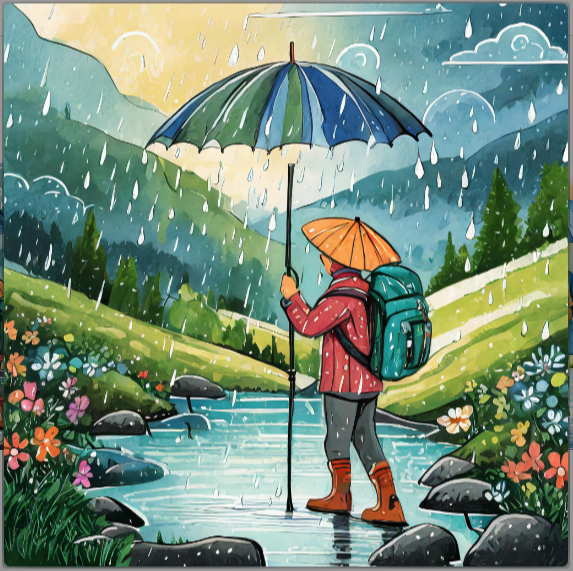
3. Use a hiking umbrella. Wearing a raincoat in warm weather can be uncomfortable due to increased heat and humidity. Consider using a hiking umbrella as an alternative. Lightweight and easy to attach to your pack, hiking umbrellas provide hands-free rain protection while allowing for better airflow to keep you cool. Some hikers even use them for sun protection.
4. Protect your gear with a pack liner. In lighter rain or when you prefer to feel the rain on your skin, a pack liner becomes essential. This waterproof barrier ensures that critical items in your backpack, such as your sleeping bag, remain dry. Opt for a lightweight and easy-to-use pack liner to maintain the integrity of your gear.
5. Prevent slips with trekking poles. During spring and summer rains, trails can become muddy and slippery. Creek crossings may also become more challenging. Use trekking poles to enhance stability and prevent slips. Gossamer Gear’s LT5 Three-Piece Carbon Trekking Poles offer lightweight support without adding unnecessary weight to your pack.
6. Pack a hat. Shield yourself from raindrops hitting your face by wearing a brimmed hat or baseball cap. This simple accessory not only directs rain away from your eyes but also provides protection from the sun when the weather clears up.
7. Consider your clothing and footwear choices. Choose clothing made from materials like wool or synthetics that repel water and dry quickly. Avoid cotton, as it absorbs water and loses insulating properties when wet. Evaluate your waterproof gear regularly and reapply protective coatings as needed. When it comes to footwear, strike a balance between waterproof hiking boots and lightweight trail runners, considering breathability and quick drying after water crossings.
8. Leave cozy items in your car. After a wet and rainy hike, having dry and cozy items waiting for you in your car can be a welcome relief. Leave a towel, change of clothes, and spare shoes at the trailhead to ensure you can refresh and warm up before heading home.
In conclusion, with proper preparation and the right gear, hiking in spring and summer rain can be an enjoyable and safe experience. Embrace the beauty of nature, even in adverse weather conditions, and make the most of your rainy day adventures.