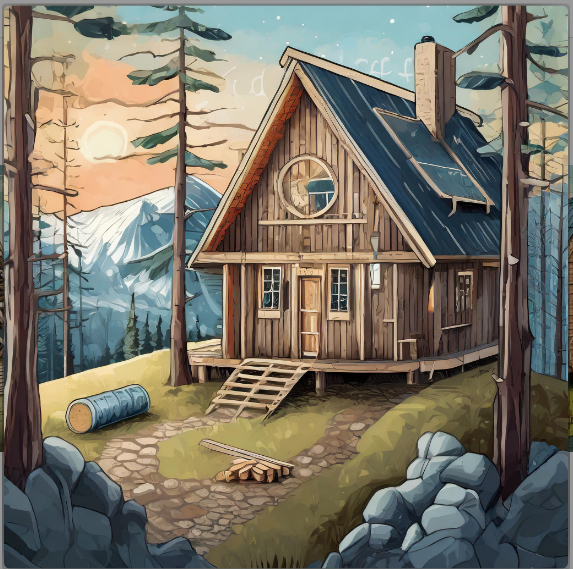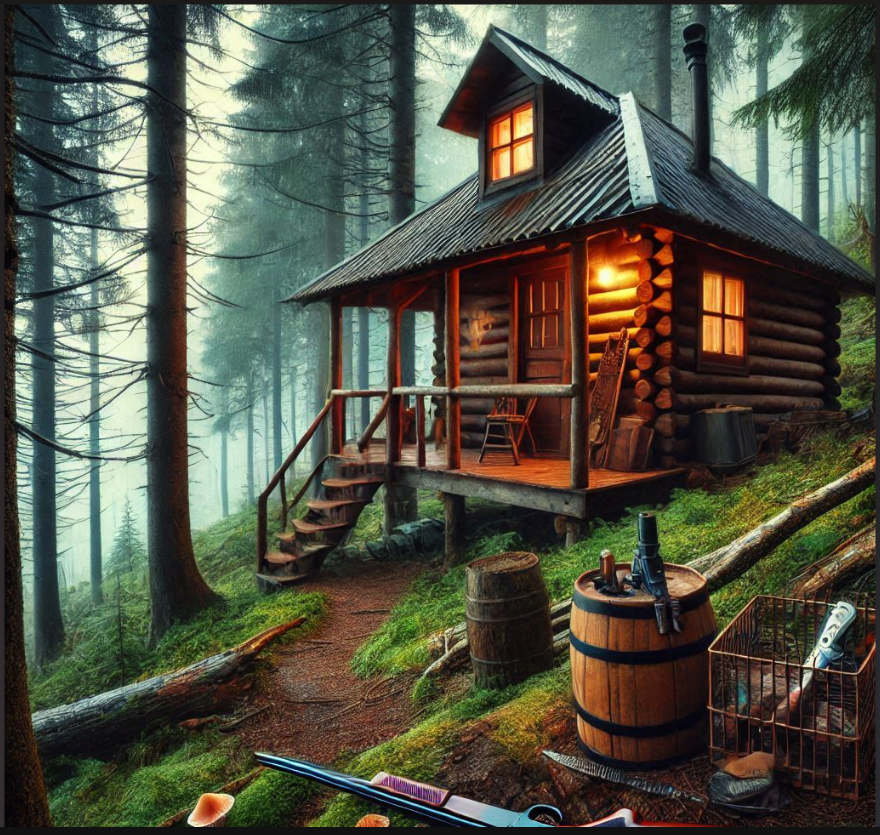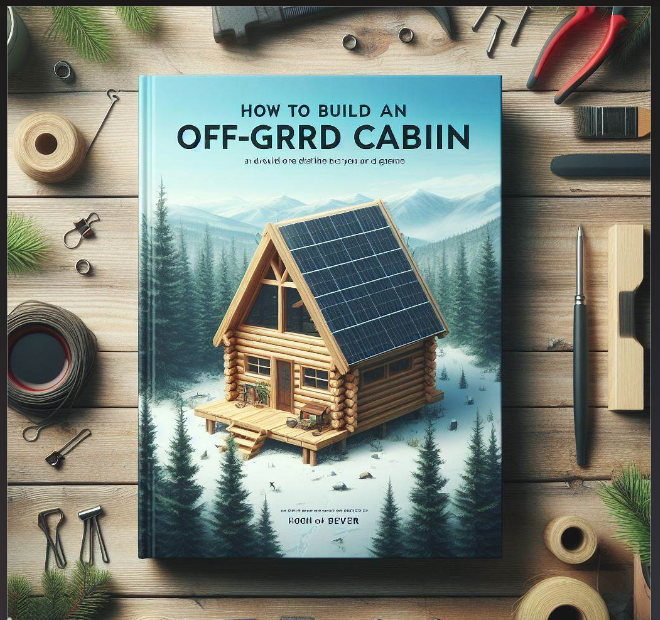
Living in an off-grid cabin offers the allure of a simpler life, surrounded by nature and free from financial strains. Contrary to popular belief, constructing an off-grid cabin doesn’t have to break the bank. With careful planning and resourcefulness, you can build a beautiful and affordable cabin that aligns with your dream lifestyle. In this guide, we’ll take you through the planning process, the construction steps, and how to power your cabin using off-grid solutions.
Planning Your Cabin
Find the Right Land
Choosing the right location is crucial. Utilize online platforms like LandWatch and Zillow to search for land listings. These websites provide a comprehensive database of available properties, helping you find the perfect piece of land for your off-grid cabin. Look for land with abundant rocks and trees, and access to water. Be aware of building regulations and zoning restrictions by consulting County Property Appraiser GIS mapping services. If you find land on a dirt road, consider that the County might pave it one day.
If you choose a lot on a dirt road, make sure to know who is responsible for maintaining the road. In some cases, the County will only maintain the road upon request. Private roads will take co-operation with the neighbors to maintain.
If you can afford it, buy the adjoining acreage if available. Wouldn’t it be awful if a Commercial Developer bought up the once quiet rural neighborhood and started building houses? Or how about a giant house next to your lot? If that’s not part of your plan, find out what land is available and start making offers. Land is something that they are not making more of! Consider donating your surrounding acreage to a Land Conservation Trust to forever protect your privacy and reduce your tax burden.
Consider purchasing a Commercial Drone scan of your property, these generally run $130-$200 per mission. The cost can vary depending on the level of detail and size of your acreage and if you are looking for, topographical, thermal scanning, etc. Knowing what’s on your land is vital, is 1/2 the lot a swamp? Is the back acreage full of blown over timber? Did someone build a structure on the property? These are important things to know that do not always turn up on Satellite imagery, also consider most Satellite photos are outdated.
Know Your Budget
Consider costs for site preparation, off-grid utilities, logs, tools, roofing, interior, and other essentials. Determine a realistic budget to guide your decisions. You can also check property appraiser GIS mapping services for information on property taxes and valuations.
Design and Floorplan
Plan the interior layout, wall heights, and roof pitch. Consider factors like cabin position, weather conditions, insulation, water harvesting, sewage system, and overall design. Obtain topography survey maps from the US Geological Survey to understand the land’s physical features better.
Building Your Off-Grid Cabin
Selecting Logs
Choose logs at least 10 inches in diameter, ensuring they are straight. If cutting them yourself, debark the logs and let them dry for at least six months.
Laying the Foundations
Choose between strip, raft, and pad foundations based on your cabin’s specific needs and the soil conditions of the site.
Raising the Log Walls
Opt for either Butt and Pass or Saddle and Notch methods. Butt and Pass require strength, while Saddle and Notch offer a traditional look. Ensure logs are securely fastened.
Fitting Windows and Doors
Use a chainsaw to cut openings for windows and doors. Place lintels logs for structural stability.
Building the Gable Walls and Roof
Gradually raise logs for gable walls, forming a triangle. Use the final ridge log to join the peaks.
Powering Your Cabin Off the Grid
Choose alternative energy sources based on your location and power needs:
Wind Turbine
Ideal for areas with strong winds.
Micro-Hydro Electricity
Suitable if your property has a flowing creek or river.
Solar Energy
Best for warm areas. Consider products like the Anker SOLIX F1200 Portable Power Station for efficient off-grid solar power.
Other Tips for Off-Grid Living
Prepare for the Worst
Have backup energy supplies like firewood, propane, kerosene, and diesel.
Be Aware and Flexible
Monitor your energy usage, especially with solar power.
Siting the Outhouse
Carefully choose the location of the outhouse, considering nighttime accessibility.
Conclusion
Building an off-grid cabin requires ingenuity, financial restraint, and attention to detail. Once completed, the rewards of self-sufficiency and a closer connection to nature make it worthwhile. Embrace the shift in lifestyle and enjoy the benefits of living in the off-grid cabin you’ve built – a new chapter awaits.
FAQ about Off-Grid Cabin
What is the Easiest Cabin to Build?
The vertical log cabin with an A-type timber frame is the simplest to construct, featuring a triangular roof and steeply sloped walls. Timber-frame cabins, utilizing large wooden beams, are also straightforward to build.
What Do You Need for an Off-the-Grid Cabin?
Materials for construction, basic supplies, water source, power system, income source, and daily entertainment are essential for off-grid cabin living.
How Do Off-Grid Cabins Get Electricity?
Options include wind turbines, solar power, micro-hydro electricity, and generators using gasoline, diesel, or propane. Solar and wind power are popular choices due to their renewable nature and independence from traditional energy grids.