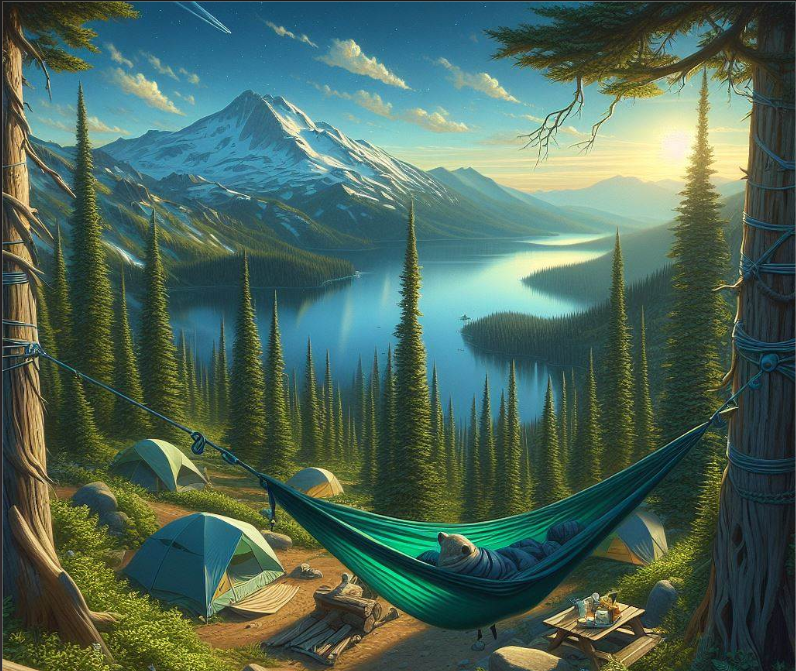
Spending a night in the woods can be an incredible experience, and hammock camping adds an extra layer of comfort to the adventure. Contrary to popular belief, you don’t have to sacrifice comfort when switching to a hammock. In fact, when done right, hammock camping can be quicker to set up, lighter to pack, and more comfortable for a good night’s sleep suspended between two trees.
Setting Up Your Hammock
Find the Right Trees
Selecting sturdy trees is crucial for a safe and enjoyable hammock camping experience. Look for trees approximately 12-16 feet apart (3-4 meters). To avoid harming the trees, use tree straps, which are affordable and easy to find. If trees are scarce, consider using portable hammock stands or get creative with your surroundings.
Place Tree Straps on Tree
Secure the tree straps around eye height, ensuring they are at the same level on uneven ground. Pass one end of the strap through the loop, then attach it to the hammock via rope or carabiner. This method is gentle on the trees and simplifies your setup.
Setting Up Your Hammock Tarp (Optional – But Recommended)
A hammock rain fly, essentially a tarp, extends over a ridgeline between the trees, providing protection from rain. Ensure the tarp extends at least 12 inches past each end of your hammock. Adjust the tightness based on weather conditions, allowing for airflow in fair weather and a snug fit during rain.
Connecting Your Hammock to Your Straps
After setting up the rain fly, tie your hammock ropes to the tree straps using your preferred knot or carabiners. Maintain the right tension; neither too tight nor too saggy. Adding a loop at the end of your hammock line can speed up the setup process.
Getting Comfortable
Proper Hammock Angle
Achieving the right hammock angle is essential for comfort. A slight diagonal angle, around 30 degrees, allows for a flat lay, relieving pressure on your head and feet. Adjust the angle based on your preferences, ensuring you can lay flat and comfortably.
Put a pillow (or jacket/clothes if not car camping for minimalism) under your knees to prevent hyper-extension. You are not laying diagonal which will keep you straight, but till you figure it out, this will solve that problem for you.
Using Sleeping Gear
To enhance comfort, consider using a sleeping pad inside your hammock for warmth and added padding. Experiment with different setups, and if needed, adjust the foot end of your hammock to alleviate any discomfort.
Blocking the Weather
Hammock Rain Fly
A hammock rain fly, or tarp, protects you from rain and wind. Ensure it is tightly secured over the ridgeline, using guylines to manage airflow and water protection. Implement a drip line to prevent water from flowing down your ridgeline and into your hammock.
Blocking the Bugs
Hammock Bug Nets
For bug protection, invest in bug nets designed for hammock camping. Modular bug nets are easy to set up by slipping them over your hammock and securing them to the ridgeline. They effectively keep bugs out without hindering the setup.
Staying Warm
Sleeping Gear for Warmth
To stay warm during chilly nights, use a sleeping pad inside your hammock. Consider top and bottom quilts for additional insulation. A combination of sleeping pad, sleeping bag, and quilts can provide a cozy and warm hammock camping experience.
Hammock Vs. Tent Camping: Pros & Cons
Comfort
Comfort is subjective, and both hammock and tent camping offer unique experiences. Test both methods in different scenarios to determine your personal preference.
Ease of Setup
Setup difficulty varies based on equipment, weather, and location. In ideal weather, hammock camping is generally easier.
Bad Weather
Tenting is usually more comfortable in severe weather conditions. Both options are suitable for various climates.
Addressing Common Concerns
Getting Comfortable
Finding the right angle and adjusting your hammock setup can significantly improve comfort. Experiment with different configurations until you find what works best for you.
Versatility
While hammocks excel in areas with limited flat ground, tents are more versatile in terms of location. Consider the environment and available resources when choosing between a hammock and a tent.
Hammock camping offers a unique and enjoyable experience when approached with the right knowledge and equipment. Experiment, adapt, and embrace the freedom and comfort that hammocks can provide in the great outdoors.