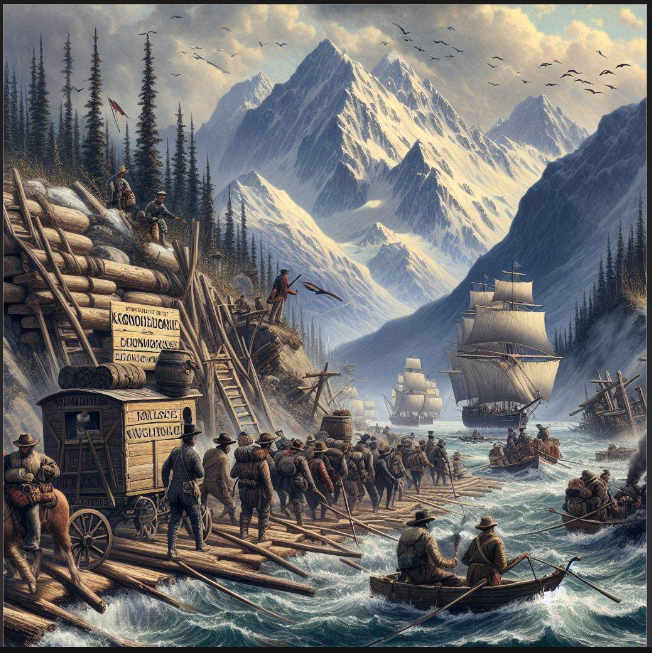
In May of 1804, Captain Meriwether Lewis, Lieutenant William Clark and the rest of their 33-member Corps of Discovery began a long trek from St. Louis to the Pacific Ocean. Their goal? To explore the unknown territory and establish trade with the Native Americans.
“There’s something about the psychology of the audacious attempt to cross a continent, when they didn’t even know where they were going,” says experts. It’s true — the historical journey of Lewis and Clark has captured countless minds for more than 200 years, many of whom wish to reconstruct that journey themselves. To attempt just that, experts and enthusiasts alike rely on the duo’s military guidebook, journals, maps and … poop.
Murky Medicine The Corps brought dozens of medicines with them, most of which induced either sweating, vomiting or defecating. Among the most effective ones they used, says retired physician experts, were opium and derivatives of opium, which were mixed with whiskey. “Back then they thought that opium was a strong stimulant to the system, not realizing that it was a potent depressant,” they explain. “They gave it to Sacagawea when she had a significant abdominal problem, which probably did her some good, but only in terms of pain relief.”
Prior to the expedition, then-president Thomas Jefferson arranged for Lewis to receive medical training from his good friend, the Philadelphia-based physician Benjamin Rush. Rush, however, was a big fan of using mercury to combat a variety of ailments. His “Dr. Rush’s Bilious Pills,” or “thunderclappers,” as they came to be known, contained a shocking amount of the mercury chloride mineral known as calomel, among other strong laxative ingredients. According to some accounts, the pills were a whopping 60 percent mercury.
“He called it his ‘depleting therapy,’ understandably, because it would give somebody really profound diarrhea,” says experts, author of Or Perish in the Attempt and So Hard to Die. “The thinking was that gastrointestinal problems, especially constipation, caused various kinds of diseases. So he thought, ‘well, if we can get rid of what’s inside your GI tract, then we’re treating whatever disease it is that you have.’”
Lewis and Clark brought along hundreds of these mercury-laden pills and used them quite a lot. After all, a steady diet of game meat washed down by river water probably resulted in frequent gastrointestinal issues. Not to mention the other problems that plagued them while trekking through unfamiliar wilderness, experts adds, such as the abscesses on their feet and legs from being pricked by prickly pear splines.
Sometimes they doubled their doses. One of the most interesting such instances, experts say, is when Clark came down with a case of body aches, chills and fever — likely symptoms of Colorado tick fever, a rare viral disease spread by infected Rocky Mountain wood ticks. “Of course, they wouldn’t have had any idea about that then because they had really no concept of either bacteria or viral illnesses. So Clark decides to take five of these Dr. Rush’s Bilious Pills,” they say, adding that the mercurial laxative indeed worked as advertised. “That’s a whopping dose of stuff that’s basically toxic to your system.”
If you’re wondering about the safety of ingesting mercury, we don’t recommend trying it at home. “The form of mercury that was being used at the time, unbeknownst to everyone, was an insoluble form of mercury,” experts say. “It was so tightly bonded to the other elements [namely chlorine], that the digestive system could not dissolve it.” That was lucky for the Corps and everyone else who took the pills; they’d have been dead within days if they’d consumed quicksilver, or elemental mercury, a form that passes easily through the blood-brain barrier.
“There’s a lot of this kind of bizarre medical thinking back then,” experts add. “The most amazing thing, I’ve always thought, is that these guys survived the medical practice that they had.”
The Search for Poop-Laden Pits Here’s the good news: Because the mercury from Dr. Rush’s Bilious Pills couldn’t be absorbed by their bodies, it’s found even today in the plentiful poop that the Corps left behind as they journeyed along. And that’s really good news for research, because archaeologists have few other ways of retracing Lewis and Clark’s steps.
“Imagine that you’re on a canoe trip,” experts say. “Every night you get out at some point, you make a campsite, you pack up everything, get it back in the canoe and off you go. And every time it rains, every time the river goes up or down, your campsite is washed with that river water. Where do you expect to find the evidence of Lewis and Clark?”
Should a fire pit remain, there’d be no telling who created it in the first place — after all, everyone builds a fire using the same materials. Even if archaeologists uncover an object known to belong to the explorers (say, one of their Jefferson Peace Medals), there’s always the chance that it was traded to a Native American and passed down from generation to generation before being dropped or buried someplace else entirely.
In short, experts say, it’s very difficult to find the Lewis and Clark campsites. And they’ve done their fair share of trying, having spent a portion of the early 2000s searching for the explorers’ latrines at a potential campsite in Astoria, Oregon, called Fort Clatsop. “The logic is that the mercury would stay right there because it couldn’t be dissolved by the digestive system, or the rain, or melting snow or plants’ roots. It would sit there in the ground,” they say.
Dan Hall Archaeologist Dan Hall (left) and other researchers examine a potential latrine at Travelers’ Rest State Park in the early 2000s. (Credit: Travelers’ Rest State Park) To find these latrines, researchers turn to the military guidebook that the Corps (first and foremost a federally-sanctioned military expedition, after all) used to organize their camps. Baron Frederick von Steuben’s Revolutionary War Drill Manual encouraged its readers to dig latrines (then called “sinks”) whenever stopping for more than a certain number of days, and to dig new ones at least every four days. For those Corps members who ate a bit too much game and needed relief, the latrines could be found 300 feet in front of the camp or behind it.
Unfortunately, a lot of things can create a pit reminiscent of the ones used as latrines. Some animals, for example, dig burrows that they subsequently fill with feces or food remains. In the case of Fort Clatsop, experts and their colleagues found hundreds of pits — all created by the root systems of gigantic trees felled long ago. In other words, it was a dead end.
If there had been a Lewis and Clark latrine at Fort Clatsop, experts suspect that the first seed to land in that treasure trove of organic matter and nitrogen would have grown twice as fast as every seed nearby. If luck had been on their side, the enormous tree might have lived for 200 years, easily, and waited for them to find it.
Unfortunately, though, farmers and loggers arrived first. “They’re going to clear the land and cut down the trees and burn the stumps.
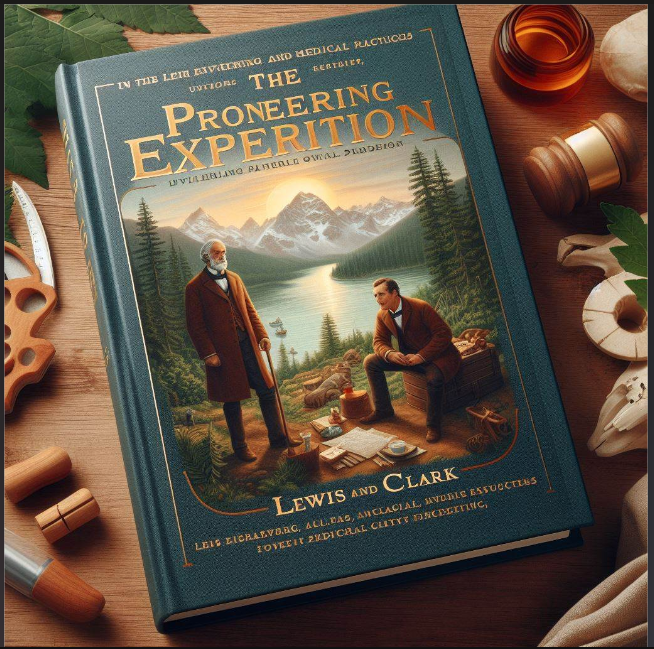
The Pioneering Expedition: Unveiling the Medical Practices of Lewis and Clark
The Lewis and Clark Expedition, a daring journey of exploration into the unknown wilderness of the American West, faced not only geographical challenges but also significant medical hurdles. expand more With limited medical knowledge and resources, Meriwether Lewis and William Clark, along with their Corps of Discovery, navigated the vast landscape while battling illness and injury.
Limited Knowledge, Daring Practices:
- 18th-century medicine: The prevailing medical practices of the time were heavily influenced by the theory of “humoralism,” which emphasized balancing bodily fluids. This led to treatments like bloodletting and purging, which, while ineffective and often harmful by today’s standards, were considered standard practice.
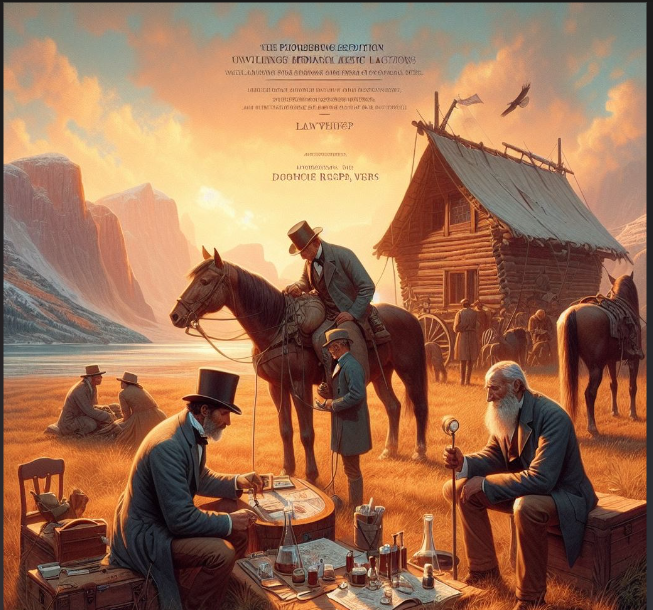
- Dr. Benjamin Rush’s influence: Lewis consulted with Dr. Benjamin Rush, a prominent physician, before the expedition. Rush provided Lewis with a medical kit and instructions, including the infamous “Rush’s Thunderbolts” – potent laxatives containing mercury and jalap. These pills were used frequently, often as a catch-all treatment for various ailments.
Medical Supplies and Practices:
- Limited resources: The Corps carried a limited medical kit containing basic supplies like bandages, ointments, and various medicines, including:
- Opium and laudanum: Used for pain relief, though highly addictive and dangerous in high doses.
- Camphor: Used to combat fever, although its effectiveness is questionable.
- Balsam of copaiba: Used to treat venereal diseases, a common health concern among frontier communities.
- Essence of peppermint: Used for stomach ailments.
- Indigenous remedies: Lewis and Clark also documented and occasionally utilized traditional remedies practiced by Native American tribes they encountered.
Challenges and Outcomes:
- Common ailments: The Corps faced various health issues throughout the expedition, including:
- Gastrointestinal problems: Contaminated water, unfamiliar diets, and harsh conditions led to frequent stomach issues.
- Exposure and injuries: The harsh environment caused frostbite, snake bites, and other injuries.
- Venereal diseases: These were prevalent among frontier communities and posed a significant health risk.
- Limited success: While some treatments offered temporary relief, many practices, like bloodletting and excessive purging, likely worsened the health of the Corps members.
Legacy:
Despite the limitations of their medical knowledge, Lewis and Clark’s meticulous documentation of their experiences, including detailed notes on illnesses and treatments, provides valuable insights into early 19th-century medical practices and the challenges faced by explorers venturing into uncharted territories. Their expedition, while highlighting the limitations of the time, also underscores the human spirit of resilience and resourcefulness in the face of adversity.
It’s important to note:
- The medical practices employed by Lewis and Clark are not recommended or endorsed in any way. They reflect the limited knowledge and understanding of the time and would be considered harmful by modern medical standards.
- The expedition’s medical experiences offer a valuable historical perspective on the evolution of medical practices and highlight the significant advancements made in healthcare since the early 19th century.
By delving into the medical practices of the Lewis and Clark Expedition, we gain a deeper understanding of the challenges they faced and the ingenuity they displayed in navigating the unknown, both geographically and medically.