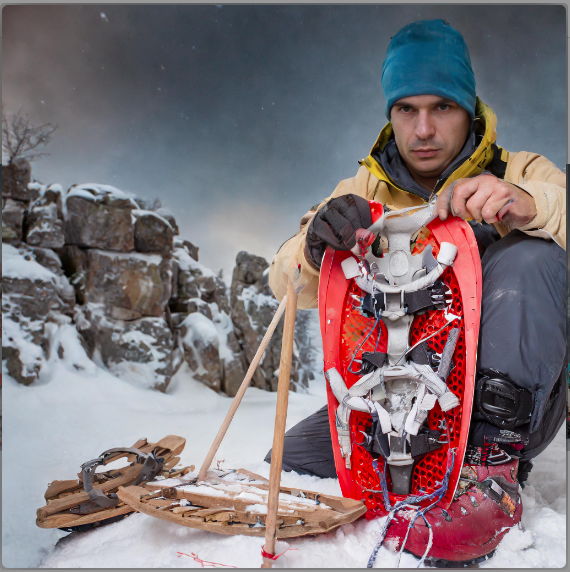
Winter hiking can be a challenging and rewarding experience, but encountering unexpected deep snow without proper gear can quickly turn it into a survival situation. Few scenarios are as frustrating, exhausting, and potentially dangerous as post-holing through thigh-deep snow without snowshoes. In this article, we will explore a practical and resourceful solution to this problem—crafting your own snowshoes.
The Plight of Post-holing:
Picture this: you’re on a winter hike, and either an overnight storm has blanketed the trail in deep snow, or you realized too late that you forgot to pack your snowshoes. With miles to go and energy levels depleting rapidly, it’s essential to find a solution that allows you to conserve energy, move efficiently, and stay dry.
The Snowshoe Solution:
This article suggests a clever technique inspired by the snowshoes to help hikers navigate through deep snow without the proper equipment. The method involves creating improvised snowshoes using green pine branches. Here’s a step-by-step guide on how to construct and use these makeshift snowshoes:
- Selecting the Right Branches: Start by identifying two green pine branches that are about three times the length of your boots. Opt for branches that are still full of needles, as densely needled boughs perform better than strips of bark or wooden boards. The gaps between the needles mimic the lattices found in regular snowshoes, allowing the snow to sift through.
- Positioning the Branches: Place the branches lengthwise on the ground and step onto the center of each branch. Orient them so that the tips face forward, and the woody stems extend behind you. This positioning ensures optimal weight distribution for effective snowshoeing.
- Securing the Branches: Strap the boughs securely to your boot soles using compression straps, cordage, or tent guylines. It’s crucial to fasten them tightly to prevent shifting during movement. Trim any excess overlap to avoid tripping hazards.
- Weaving Straps Through Boot Laces: To further enhance stability and prevent the branches from shifting as you walk, weave the straps through your boot laces. This additional measure helps maintain a secure connection between your improvised snowshoes and your footwear.
Conclusion:
While postholing in deep snow without proper snowshoes can be a challenging predicament, the snowshoe technique offers a practical and effective solution. By utilizing readily available green pine branches and following the steps outlined in this article, hikers can conserve energy, move more efficiently, and increase their chances of reaching their destination safely, even in unexpected winter conditions. Always remember to stay vigilant, adapt to your surroundings, and prioritize safety when facing unexpected challenges in the great outdoors.