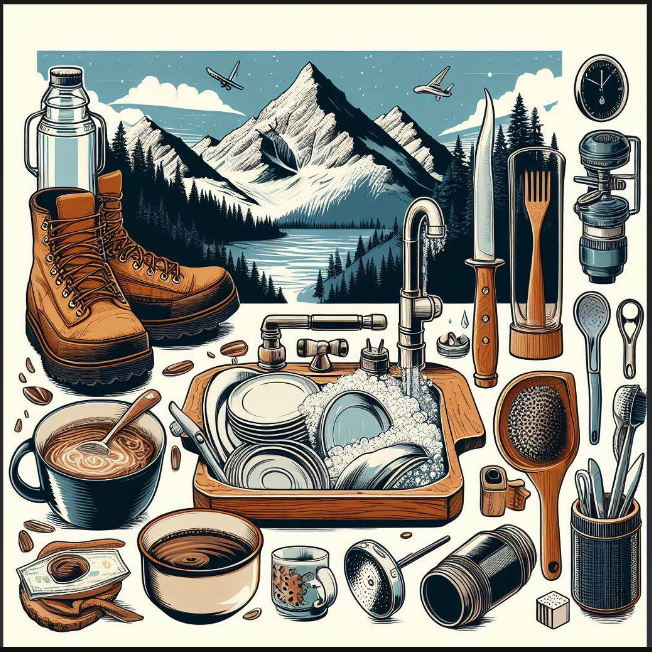
In the great outdoors, the absence of a conventional sink doesn’t have to be a hindrance to maintaining cleanliness. When it’s time to tackle post-meal dishes at your campsite, follow this step-by-step guide for effective backcountry dish scrubbing. All you need is a few essential tools, a camp-friendly soap, and a commitment to Leave No Trace principles.
Step 1: Gather Your Supplies As your meal concludes, gather your soap and a reliable washing rag. Opt for a camping-friendly, biodegradable soap like McNETT Smart Suds to minimize your environmental impact. These eco-conscious soaps ensure that your dishwashing process aligns with responsible outdoor practices.
Step 2: Choose Your Container and Water Source Select the largest pot available and fill it with water. In snowy conditions, leverage the winter wonderland around you by using snow as your water source. When using snow, consider adding a small amount of liquid from your water bottle to the bottom of the pot. This not only prevents scorching but also facilitates faster melting.
Step 3: Heat the Water Place the pot on your camping stove and heat the water until it reaches a boil. If you’re melting snow, the added liquid in the pot will expedite the process. Ensure the water is hot enough to effectively clean your dishes but allow it to cool slightly to avoid burns during the washing process.
Step 4: Divide and Conquer Once the water is heated, divide it between two pans. Add a small amount of your biodegradable soap to one of the pans. Allow the soapy water to cool just enough to handle without discomfort. This setup provides you with a wash basin and a rinse basin, making the dishwashing process efficient and thorough.
Step 5: Wash and Rinse Take each dish and wash it in the soapy water, using your prepared washing rag. Ensure thorough cleaning by scrubbing away any food residues. After washing, dip the cleaned dish into the second pan filled with clean water for rinsing. This two-step process guarantees that your dishes are not only clean but also free from soap residue.
Step 6: Dispose Responsibly Strain out any food particles from the water and collect them in your trash bag. Dispose of your waste properly, adhering to Leave No Trace principles. Scatter the used water at least 200 feet away from streams or any other water sources, minimizing your impact on the environment.
Conclusion: With this comprehensive guide, you can master the art of backcountry dishwashing, even without a traditional sink. Embrace the simplicity of this method, use environmentally friendly products, and leave your campsite as pristine as you found it. Happy camping and responsible dishwashing!