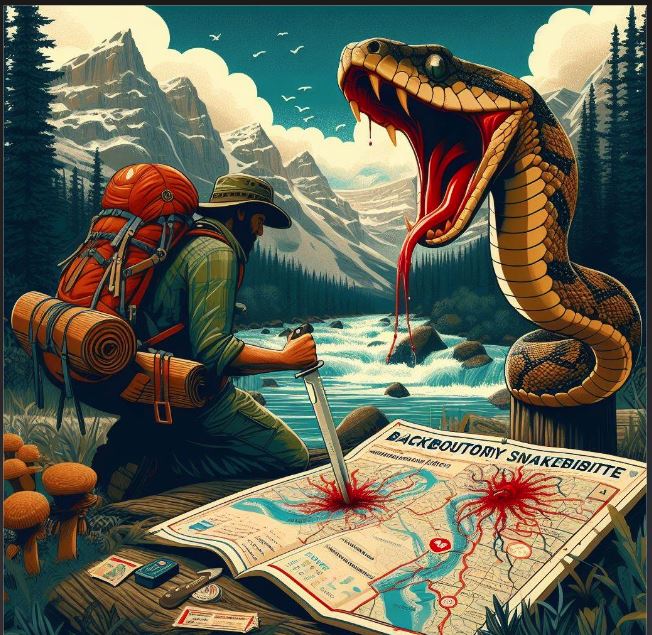
Imagine finding yourself deep in the backcountry, alone, and suddenly bitten by a venomous snake, like a rattlesnake. It’s a harrowing scenario, but there’s no need to make peace with mortality just yet. In this article, we’ll guide you through the crucial steps to take if you ever encounter such a situation. Panic is not your friend here; instead, a calm and calculated response is your best shot at survival.

- Stay Calm and Assess the Situation:
- Begin by taking a deep breath. Panic can exacerbate the effects of venom by increasing your heart rate.
- Instead of running around frantically, try to stay still and calm. Praying or focusing your thoughts can help steady your nerves.
- Avoid the urge to retaliate against the snake. Instead, try to identify it without putting yourself at risk. Knowing the snake species will aid in obtaining the correct antivenin.
- Examine the Wound:
- Carefully inspect the bite area. Venomous snakebites usually leave two distinct puncture marks.
- No visible holes? There might be no venom injection. However, it’s essential to treat every snakebite seriously, as some snakebites may not leave clear marks.
- Apply a Compression Bandage:
- If the bite is confirmed, use a compression bandage to wrap the affected limb. This helps control bleeding, as snakebites can be prone to excessive bleeding.
- Ensure that the bandage is tight enough to control bleeding but not so tight that it restricts blood circulation.
- Remove any constrictive items, such as jewelry or watches, near the bite site.
- Gather Essentials and Move Slowly:
- Collect your essential gear, food, and water. A walking stick can assist you in maintaining stability.
- Move slowly and steadily, keeping your heart rate low. Stick to trails to make it easier for searchers and fellow hikers to locate you.
- Even if the snakebite seems minor, seek medical attention promptly to prevent potential infections.
- Survival Myths Debunked:
- Drinking urine in a survival situation is not a smart move, as clarified by Den Mother in a previous issue.
- Enema bags in life rafts are not a solution for hydration; they are designed for those unable to take liquid by mouth. Hydration requires fresh water intake.
- Don’t attempt to use urine or seawater as a means of hydration, as they do not filter out impurities or toxins.
Conclusion:
Facing a snakebite in the backcountry can be daunting, but with a clear head and the right actions, survival is possible. Stay calm, assess the situation, and follow the steps outlined here. Remember, your best chance at overcoming a snakebite.